
Design Inspiration
July 21, 202415 min
Interior Design Movements 2026: Minimalism, Japandi and 8 Other Styles
From Classic to Minimalism, Art Deco to Japandi, a comprehensive guide to the most influential interior design movements worldwide.
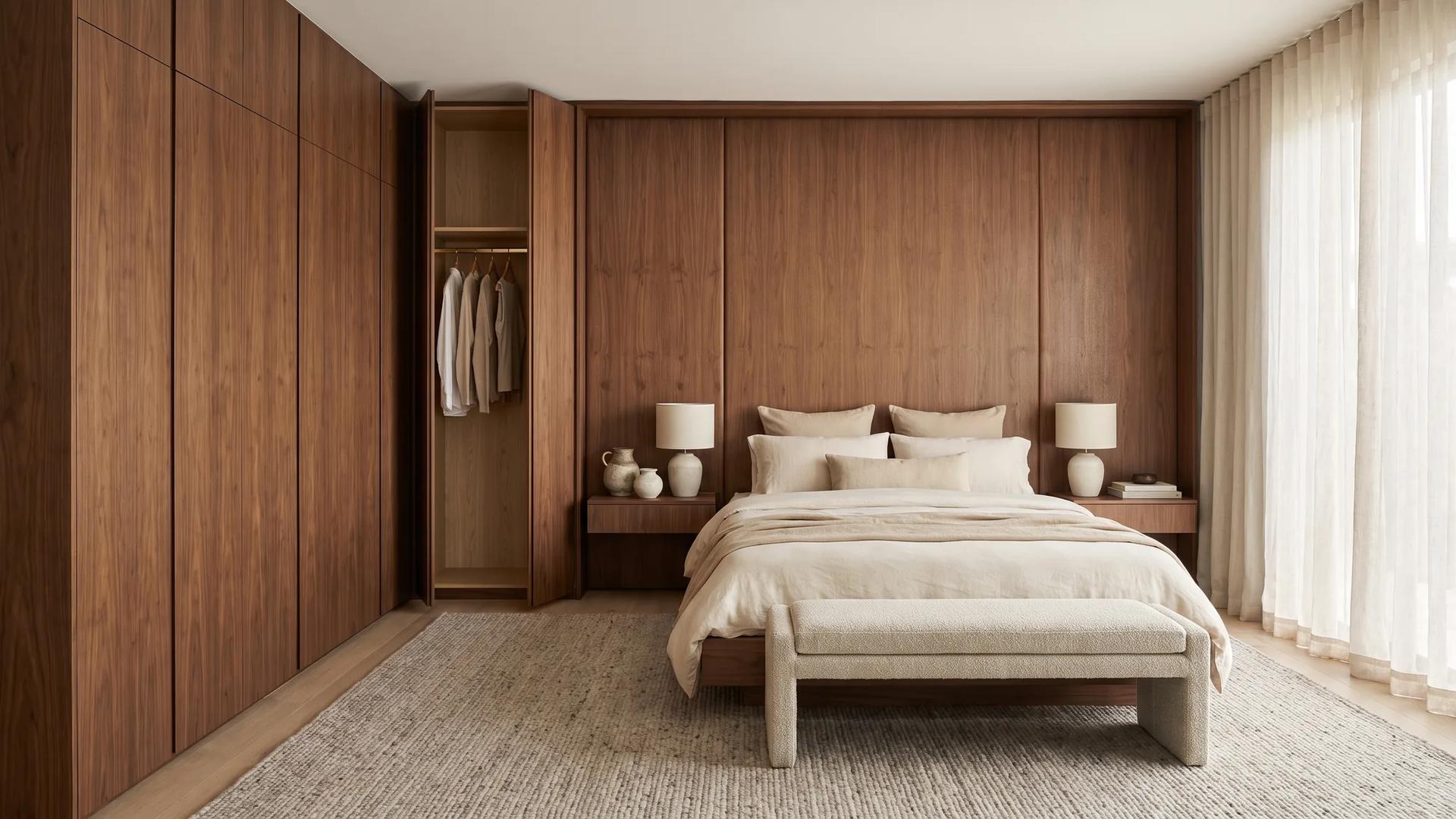
When you walk into a bedroom, your eye does not fix on a single piece of furniture first, it senses the whole room. However impressive a huge fitted wardrobe against the wall may be, if the bed is in a different wood tone, the nightstands wear a different handle, and the lighting has a different warmth, the room falls apart. I have seen this in thousands of bedroom projects: the problem is rarely poor furniture quality, it is that the pieces do not speak to one another.
There is a common tendency in this industry: some brands try to sell an entire room around a single hero product, often an elegant wardrobe or a walk-in closet box. The wardrobe is glossy, it photographs beautifully, but the rest of the room looks like an afterthought. Our thesis is the exact opposite. We do not sell you a closet. We design the bedroom as one single material and proportional system: wardrobe, bed, nightstands and lighting in one language. Let me explain how we build that coherence at Modoko, in a place founded by Ibrahim Yegen in 1981 that has grown into a 1,200-square-meter production facility.
Treating a wardrobe as an isolated product is one of the most expensive mistakes you can make. The wardrobe is the largest vertical surface in the room; it covers nearly half of a wall. If the tone, texture and proportion of that surface are wrong, no beautiful bed you place in the room can compensate. The room is an equation, and the wardrobe is its heaviest term.
Coherence means this: the door wood of the wardrobe shares the same grain and tone as the wood in the bed headboard. The nightstand handles come from the same metal family as the wardrobe. The texture of the bedspread carries the same warmth as the curtain, the pile of the rug, the matte of the wall. The moment you achieve this, the room calms you; the moment you miss it, it unsettles you even if you cannot name the reason. We covered the tones of serenity in our earlier bedroom collection thinking; this article is one step beyond that: not choosing a color, but binding every piece into one system.
A standard off-shelf modular wardrobe looks flexible to you, but in truth it is the opposite. Modules arrive in fixed widths, they do not match your ceiling height, they leave dead space above, and an irritating gap remains between them and the side wall. Custom production, meaning made-to-measure manufacturing, erases those gaps and makes the wardrobe part of the room architecture.
Everything begins with proportion. A bedroom has two dominant masses: the bed and the wardrobe. If you plan the footprint of these two wrongly, the room will feel cramped or hollow no matter how beautiful the materials are.
Standard bedroom (12 to 16 m2). A double bed (160x200 or 180x200) plus two nightstands takes the center of the room width. Place the wardrobe on the wall opposite the bed or along the long side wall. Leave at least 70 to 80 cm of circulation space between bed and wardrobe; a person should pass comfortably when a drawer is pulled out and a wardrobe door is open.
Mid-size room (17 to 22 m2). Here a built-in wardrobe or a single-surface system that runs the full length of a wall works beautifully. A wardrobe that fills the wall completely does not shrink the room, it creates an architectural plane, and the eye reads it as a wall. At this scale a grooming corner can also be planned.
Large room (over 22 m2). A separate walk-in area becomes possible. But be careful: we design the walk-in not as a separate box, but as an extension of the bedroom. The same wood, the same lighting warmth and the same handle language carry into the walk-in so the two spaces read as one room. We laid out the walk-in area by square meters step by step in our walk-in closet planning guide; for the carcass material decision, our solid wood versus laminate comparison helps.
The door system decision: sliding or hinged? This depends entirely on circulation. If the distance between bed and wardrobe is under 90 cm, a hinged door will block the path when open, so choose sliding doors. If the distance is generous, a hinged door gives full opening and lets you see the whole interior at once. A sliding door saves floor space but only ever opens half the wardrobe at a time; a hinged door gives access to all of it simultaneously. This decision cannot be made without fitting it to the room plan, which is exactly why made-to-measure production matters.
Material is the backbone of coherence. If a room contains three or four different wood tones, the eye reads it as clutter. Our rule is clear: the wardrobe, the bed headboard and the nightstands come, as far as possible, from the same wood species and the same surface finish.
The same walnut, the same oak or the same ash; the same matte lacquer or the same natural oil finish. Because wood is a natural material, the grain pattern shifts from piece to piece, and this is precisely why choosing the same species is essential: if the species matches, the grains speak from one family, if they differ, the result looks patchy. In our production facility we cut all the pieces of a bedroom set from the same wood batch wherever possible, so tone consistency is guaranteed. This is never possible with off-shelf modules; if you buy the wardrobe from one maker and the bed from another catalogue, matching tones is left to chance.
Hardware discipline. The lifespan of a wardrobe is hidden in the parts you never see. Soft-close hinges, silent full-extension drawer runners, high-capacity hanging rails: these are the details that keep a wardrobe working like new for 15 years. Cheap hardware starts to make noise in six months and jams within two years. We choose this hardware not for a brand logo, but for the returning customer. The same handle family and the same drawer mechanism repeat across the wardrobe, the nightstand and the chest of drawers, so every surface your hand touches feels the same quality.
We apply the same material discipline across all our custom furniture work; the bedroom is simply its most visible example.
Now we reach my favorite part. If material coherence is the backbone, color and texture are the soul dressed over it. A bedroom palette is never a single color; we build a triad of balance made of one main tone, one supporting tone and one accent tone.
The language of 2026 is about settling down. I wrote at length about Cloud Dancer, the milky white chosen as Pantone's color of the year, and that search for calm finds its most meaningful home in the bedroom. The bedroom is where you sleep, where you rest your eyes. So I always keep the main tone quiet: off-white, pale sand, warm stone grey, soft sage green. If you keep the large surface of the wardrobe in this calm tone, the room widens and breathes.
Matte or gloss? In the bedroom I am almost always on the side of a matte finish. A glossy surface reflects light, it strikes the eye when a lamp is switched on at night, and it breaks the calm before sleep. Matte lacquer, on the other hand, absorbs light, brings texture forward, and gives a velvety feel to the touch. I use gloss only in a small accent, on a handle detail or a thin metal profile.
Texture echo. This is the most subtle layer of coherence. Let the wood texture of the wardrobe repeat somewhere else in the room. The linen fabric on the headboard should share the warmth of the wardrobe matte; the wool pile of the rug should match the weight of the curtain. I call this a texture echo: the same feel repeating at three or four points in the room. When you catch this, the room reads like different sentences of a single work.
Letting the palette flow into your living area too creates a lovely coherence; thinking about how you build the tonal language across the home together with your bedroom choices makes the whole task easier.
A wardrobe should not only be beautiful from the outside, it must work intelligently from within. A wardrobe left dark inside, however expensive, tires you every morning.
Sensor interior lighting. LED strips that switch on automatically when the door opens and off when it closes are now the standard of an upper segment wardrobe. We keep the light temperature at the same Kelvin value as the rest of the room (usually around 3000K warm white) so the interior does not glow with a light that feels foreign to the room. This detail is both functional and aesthetic: you see the true color of your clothing, and you dress at night without waking your partner.
Grooming and preparation zone. In wide wardrobes or walk-in areas we plan a mirrored preparation corner. Vertical lighting on both sides of the mirror, a small counter below, shallow drawers for jewellery and accessories. This corner turns into a small vanity for the room and makes the daily routine flow.
Internal organization by use. Filling the wardrobe interior with equal shelves is the biggest waste. We build the internal layout around your use: a full-height hanging zone for long garments, adjustable shelves for folded clothes, compartment organizers in the drawers, angled shelves for shoes, upright dividers for bags. This is the most concrete benefit of made-to-measure production: the interior of the wardrobe comes out to fit your life, so you do not have to live to fit the wardrobe.
Here is the heart of this article. There is a common option on the market: standardized modular systems. Boxes waiting ready on a shelf, arriving with fixed width and height options. They are fast and look cheap at first glance, but the real cost emerges later.
Standard modular systems have three fundamental limits. The first is measurement: modules arrive in fixed widths, and your room rarely fits those dimensions exactly. The result is either a dust-collecting gap between the wardrobe and the side wall, or a dead zone between the ceiling and the top of the wardrobe. The second is the ceiling: the high ceilings of older buildings or the sloped ceilings of attic conversions never fit a modular box, whereas custom production embraces that slope. The third and most important is coherence: you buy the modular wardrobe from one place, the bed from another catalogue, the nightstand from a third source, and matching the tones, the handles and the proportions is left entirely to chance.
Made-to-measure production, meaning custom manufacturing, solves all three problems at the root. We take the real measurement of your room, build a surface that fits the ceiling height exactly, and run it flush into the side walls. And most importantly: we produce the wardrobe, the bed, the nightstands and the grooming corner as one single material and proportional system, on the same production line, from the same wood batch, with the same hardware family. Coherence becomes the result of design, not a coincidence.
Let us also think of this as a matter of cost. A standard modular system may look more accessible at entry level. But the real cost of a wardrobe that does not fit the room, whose hardware fails in five years, and whose tone does not match the other pieces, is not only the price tag. A mid or upper segment custom bedroom, because it fits the measurements exactly, works trouble-free for fifteen years, and turns the whole room into a single work, comes out far cheaper on an annual basis. Whatever your segment preference, the right starting point is seeing the measurement and the need of your room.
A bedroom is not a collection of furniture, it is a single composition. The wardrobe is the largest note of that composition, but on its own it is not a song. When the scale is right, the material is from one family, the color is calm, the texture echoes and the lighting is smart, the room gives you peace every morning and calm every evening. At Modoko we have designed bedrooms this way since 1981: not box by box, but room by room.
If you want a bedroom that fits your room measurement, your ceiling and your way of living exactly, one that speaks a single language from wardrobe to nightstand, let us start with a free design consultation. Send us the measurements and wishes of your room, and we will prepare a coherent proposal for you. Start here for a free quote and design consultation, explore our bedroom collection, learn more about our approach as Turkish furniture manufacturers, or contact us directly. We are ready to design not a box, but the whole room.
From Classic to Minimalism, Art Deco to Japandi, a comprehensive guide to the most influential interior design movements worldwide.
What changed in 2026 furniture trends? Warm minimalism, Japandi, organic forms and the natural materials revolution, expert analysis.
Browse our crafted furniture collection, each piece designed with the same principles discussed in this article.
Design inspiration, new collections and expert guides, directly to your inbox.
Our team of expert designers and craftsmen are ready to bring your vision to life.
Get a quote for your project
Get Quote