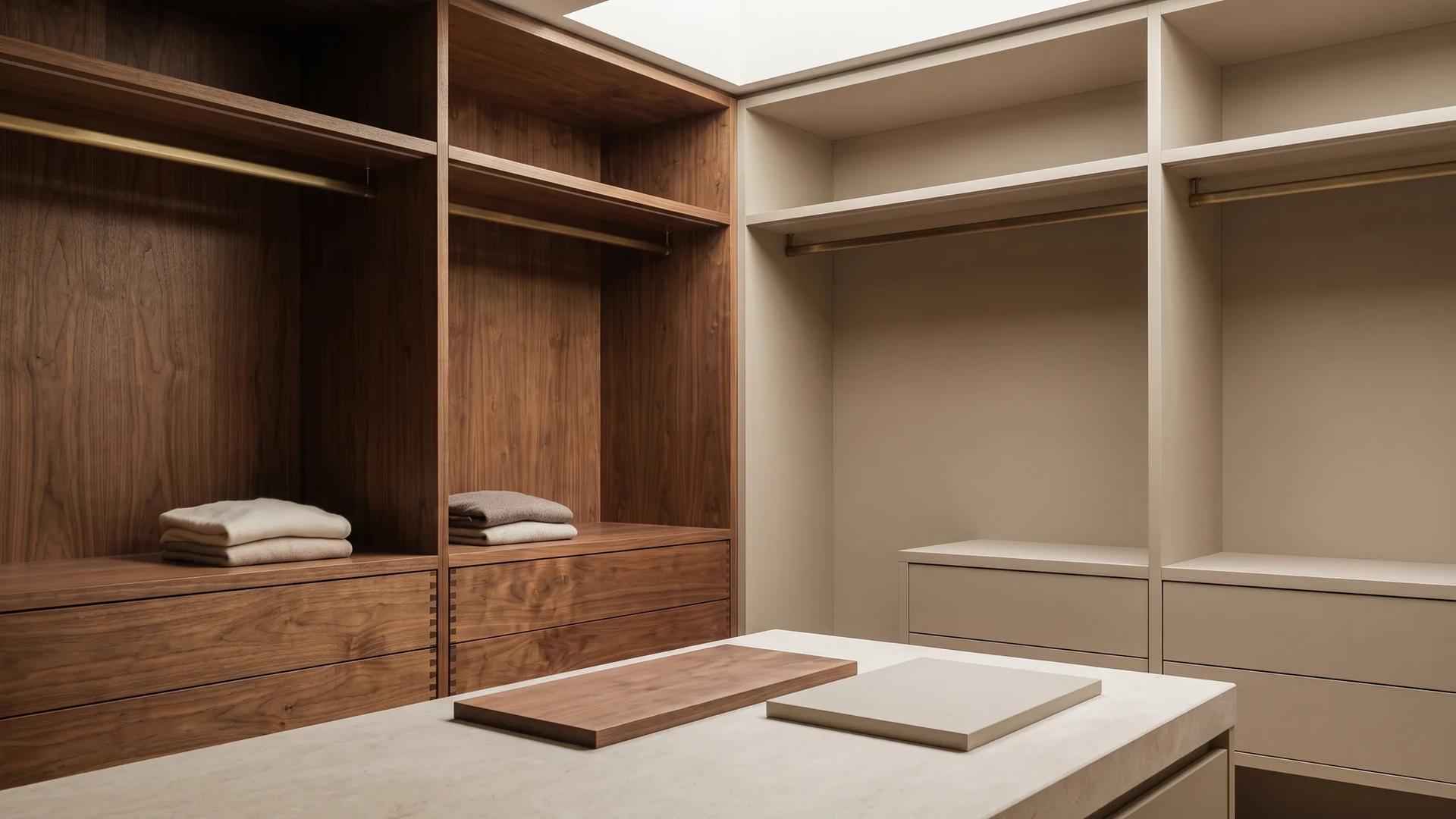
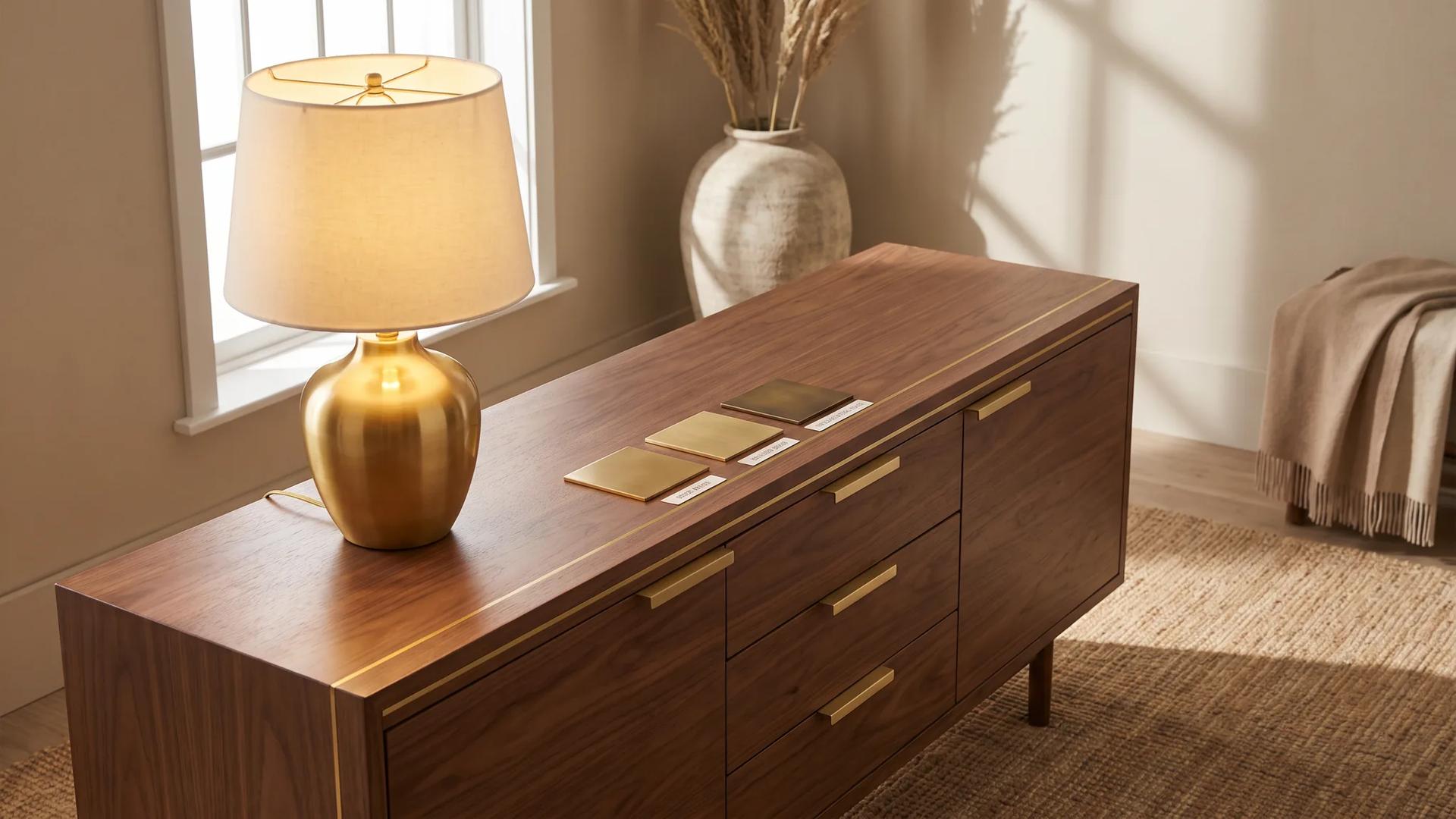
When buying a wardrobe, most attention goes to the color and the handle of the door; yet what decides how the wardrobe will stand ten years later is the carcass material. I speak from a production tradition running in Modoko since 1981: the life of a wardrobe is hidden in its unseen carcass. Here is the difference between a solid wood and a laminate carcass, told plainly, because not every wardrobe needs to be solid wood, but you should know which one you are buying.
Honest Definitions First
Laminate is a thin decorative surface bonded mostly over particle board (chipboard) or MDF. It is cheap, light, suited to mass production and gives a clean look. The vast majority of wardrobes on the market are made this way, because it is fast and low cost. There is nothing bad in this; laminate has its place.
Solid wood is kiln-dried, single-piece real timber; oak, walnut and the like. The timber is first dried, in a kiln or naturally, until it releases its moisture, then worked. This process is long, costly and demands craft. That is why a solid carcass is rare on the market; it is usually produced by a single premium segment. The difference starts here.
Five Critical Differences
1. Behavior against humidity. Particle board draws moisture; near a bathroom or in a damp bedroom the edges of a laminate veneer can swell over time. Solid wood also moves a little with humidity, but being single-piece it does not delaminate; properly dried solid wood stays stable for years.
2. Repairability. This is perhaps the biggest difference. Once laminate is scratched, its edge swells or its corner chips, it cannot be repaired; that part stays that way or gets replaced. Solid wood can be sanded and refinished. A solid wardrobe whose surface tires after ten years is renewed to its first-day look with a day of work. Solid wood is an investment, laminate is a consumable.
3. Smell. The sharp smell felt when a new laminate wardrobe is opened comes mostly from adhesives and resin and can last for weeks. We covered this in detail in our new furniture smell guide. Well-finished solid wood has a neutral, natural scent; it does not taint the smell of your clothes.
4. Lifespan. A laminate wardrobe is typically designed for five to ten years of use; then its look tires. A solid wood wardrobe is used for a generation, even passed down. Though its cost per square meter looks high, divided by years of use solid wood is often more economical.
5. Feel and weight. When you take a solid wood door in your hand you know from its weight; its closing is firm, its texture warm. A laminate door is light and flat. This difference does not show in a catalogue photo, but is felt when touched every day.
So Why Is the Market Mostly Laminate
The answer is simple: speed and cost. A laminate carcass suits mass production, comes out fast, reaches the shelves at a low price. The vast majority of high-volume brands therefore prefer laminate; the business model requires it. A solid carcass demands drying, craft and time; it rests not on economies of scale but on mastery. That is why a solid wood custom wardrobe and closet is a gap in the market; an area with demand but narrow supply. We produce exactly in that gap.
Which One, When
To be honest, not every wardrobe has to be solid wood. In a rental you will live in briefly, a child's room, or a project where budget is the priority, laminate can be a sensible choice. The places we truly recommend solid wood are these: the home you will live in for many years, the main wardrobe of your bedroom, a damp space, or cases where the wardrobe is the largest surface in the room and its tone and texture set the whole room. If you are building a walk-in closet, building the carcass from solid wood makes a difference ten years on. We covered the layout in our walk-in closet planning guide.
How to Tell When Buying
There are a few ways to tell whether a wardrobe is truly solid wood or a laminate veneer. Look at the door edge: in laminate the surface and the edge look different, often a separate band is run along the edge. In solid wood the grain turns from edge to surface without a break. Feel the weight; solid wood is noticeably heavier. If you can see a cross section, look: chipboard inside is pressed shavings, solid wood inside is real grain. Ask the seller directly: is the carcass solid or veneer, which wood. Where you cannot get a clear answer, it is usually laminate. You can find the differences between wood species in our wood types guide.
Considering a solid wood wardrobe or a walk-in closet? You can browse our wardrobe and walk-in closet models and share your project through the contact page. There is no charge before measurement, 3D render and samples; for a clear engagement just request a quote, and we come back within 24 hours.