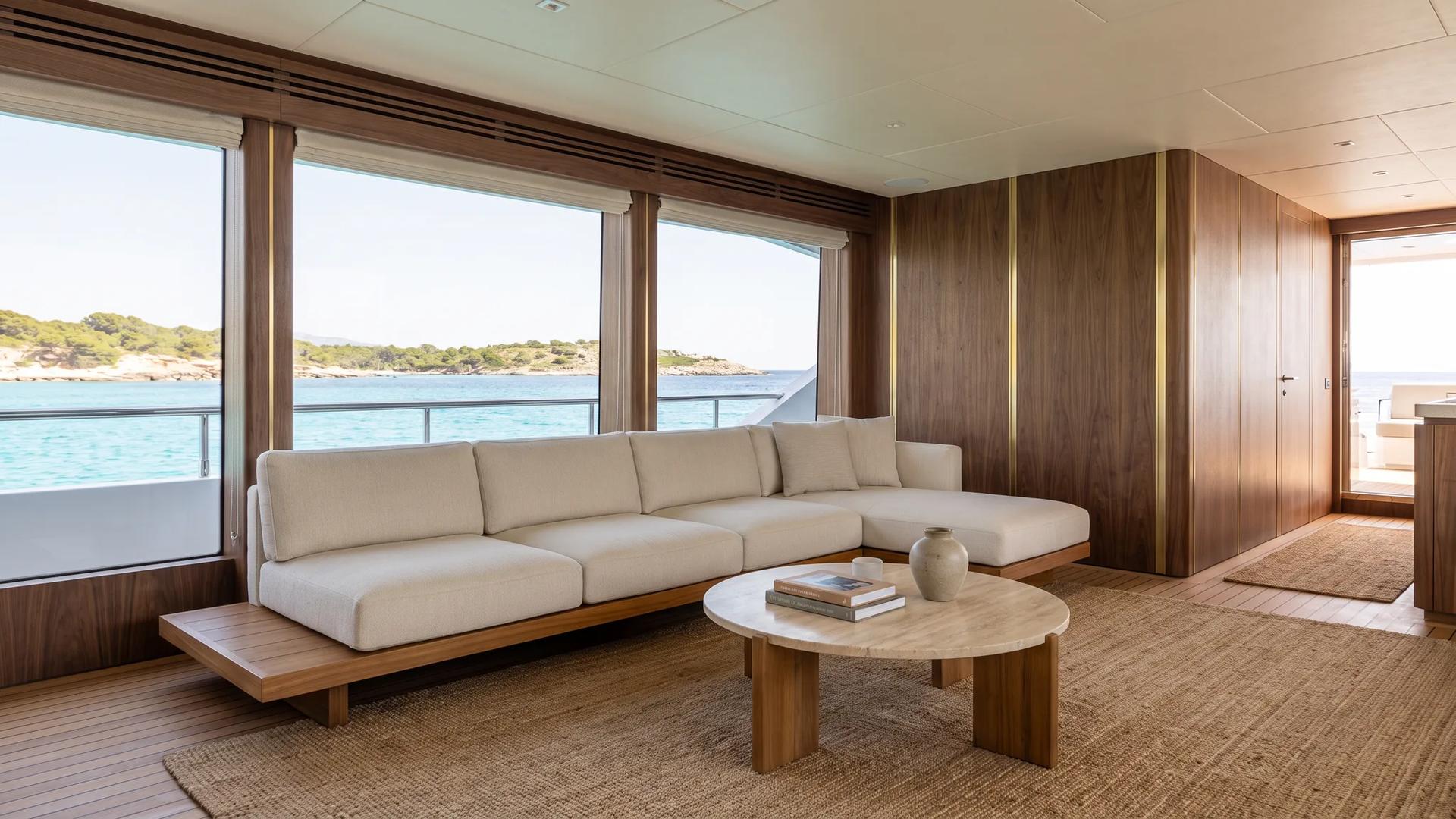
Yacht & Marine Furniture
Built for Salt, Sun and Motion
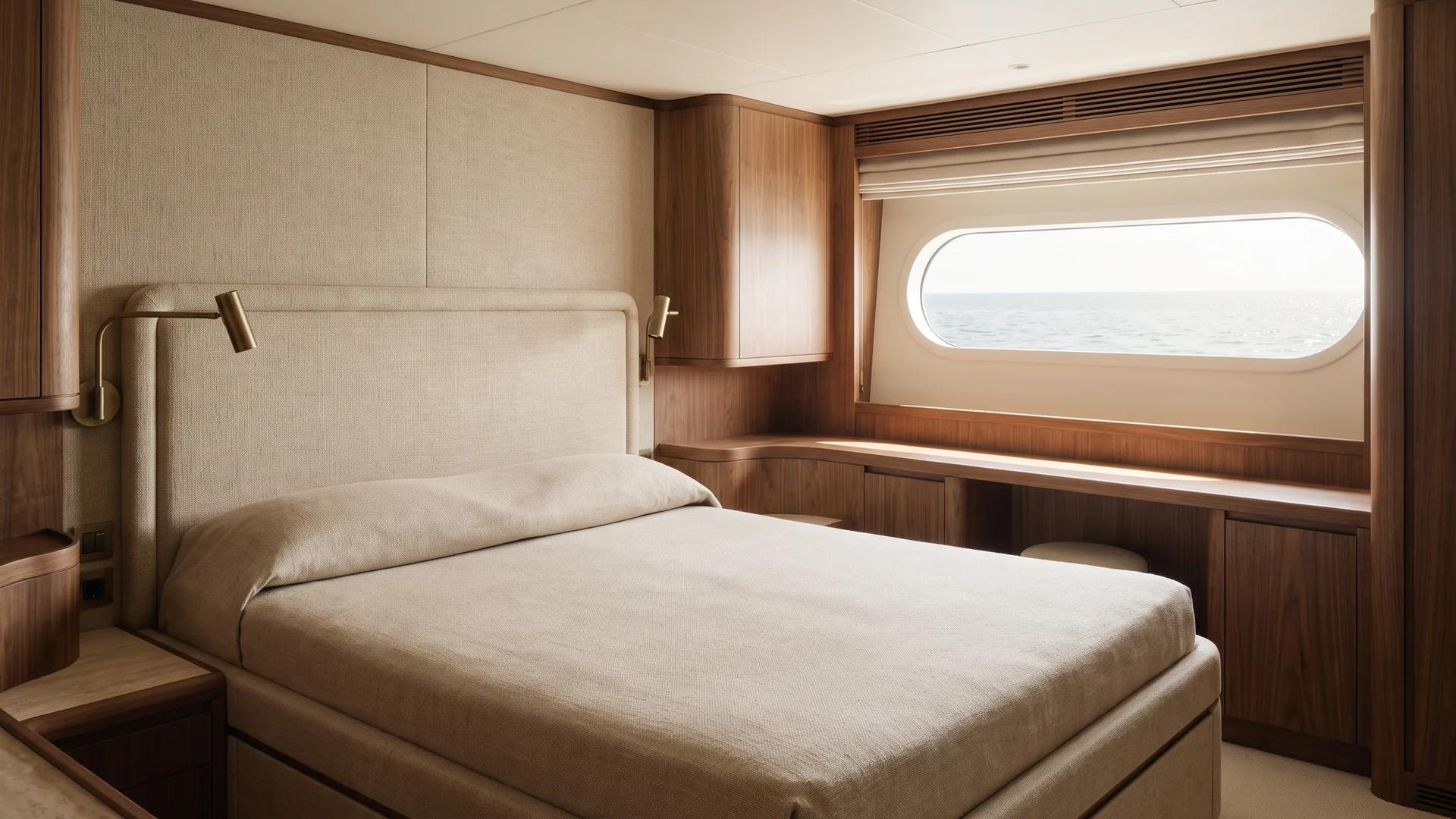
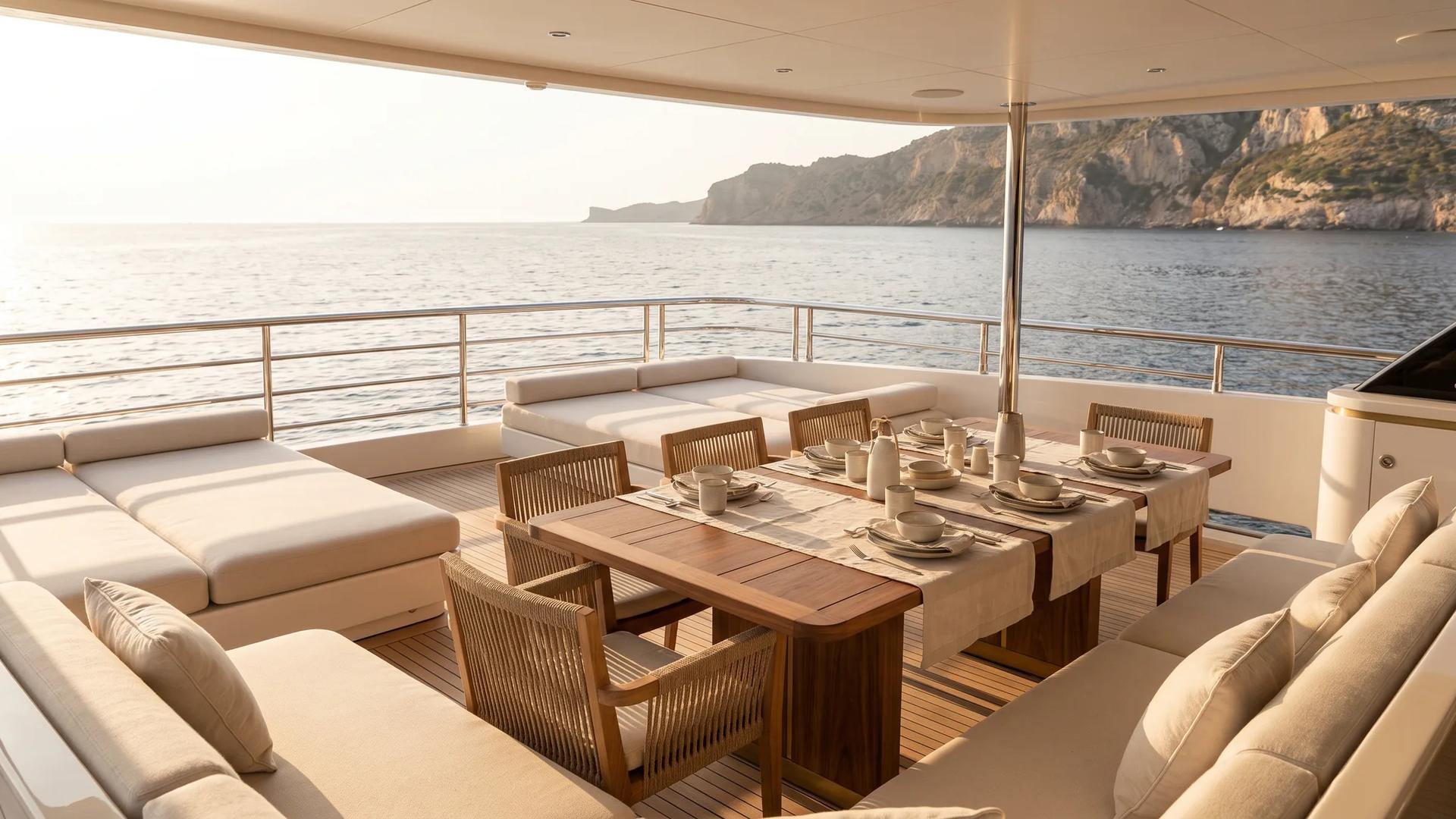
On a boat, furniture has to stand up to saltwater, UV exposure and constant motion. That is the brief behind our custom-built furniture for yacht and marine environments: cabin, salon, deck and dining pieces, made to order at our Modoko factory since 1981. Cabin dimensions come from the vessel itself, not the plan.
Marine-Grade Materials
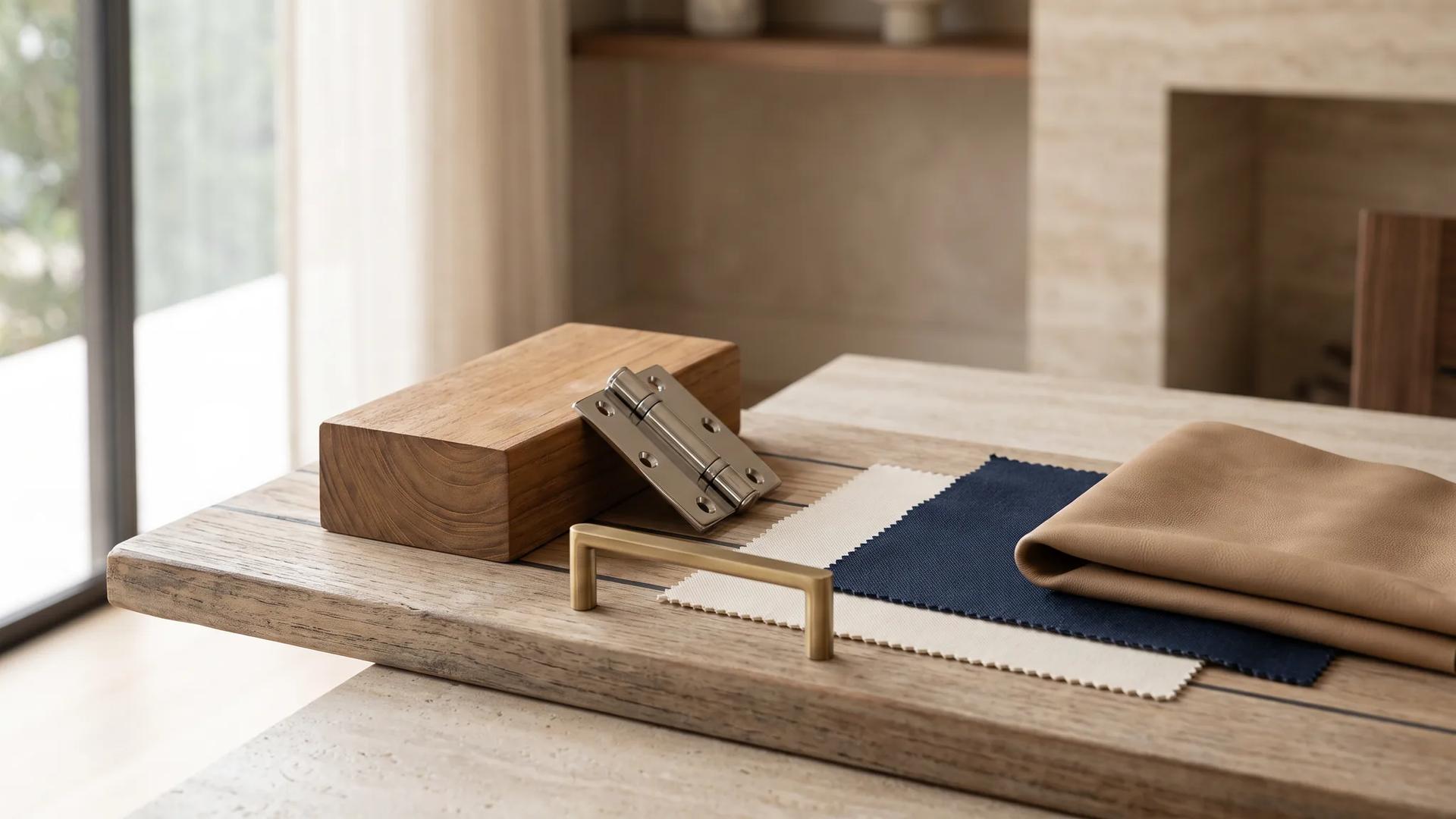
A material that behaves on land can fail at sea within a season; the selection starts there.
Teak Wood
Its natural oil keeps water and decay out, which is why it works on deck and inside alike.
Stainless Steel 316L
Marine-grade stainless steel for hardware and fittings, so they resist corrosion in saltwater environments.
UV-Resistant Fabrics
The marine textiles we use for deck cushions and outdoor upholstery resist fading and mildew, and dry quickly.
Marine-Grade Leather
For cabin and salon upholstery we use luxury leather specially treated against saltwater and humidity.
Corrosion-Resistant Brass
Marine-treated brass accessories for handles, hinges and decorative details built to last at sea.
How Marine Furniture Is Built Differently
Furniture aboard a vessel faces forces that land furniture never sees: continuous motion, vibration, humidity cycles, and salt-laden air. The build method matters more than the look.
Weight-Conscious Construction
Every kilogram added to a yacht affects trim, fuel range, and stability. We favour lighter cores and hollowed structural sections where strength allows, so a piece holds up without adding unnecessary mass to the vessel.
Fastening That Survives Motion
A vessel is never still. Joints loosened by constant pitch, roll, and engine vibration are the first failure point. We use mechanical fixings plus marine adhesives together, rather than relying on a single bond, and detail fittings so they stay tight under repeated movement.
Joinery for Humidity Cycles
Cabin air swings between damp and dry as a vessel moves between climates and runs its HVAC. Wood expands and contracts with each cycle. We kiln-dry the timber and leave room for that movement in the joinery, so the panels can breathe with the moisture instead of fighting it.
Edge & Surface Sealing
Bare end-grain and unsealed edges are where moisture gets in. We seal edges, undersides, and hidden faces, not only the visible surfaces, so the parts you never see are protected against the air they sit in.
The Multi-Layer Protection Approach
Marine durability is not one coating. It is a sequence of choices that work together, each one chosen for a specific threat: salt, humidity, UV, and abrasion.
We start with timbers suited to the sea. Teak carries a high natural oil content that resists water and decay, and on request we work with dimensionally stable modified timber for parts that face repeated wetting.
Marine-grade adhesives and sealing coatings keep humidity out of the structure, including the concealed faces that drive most long-term swelling.
Exposed surfaces take a finish chosen to slow fading and chalking under strong, reflected sunlight, the kind a deck sees all day.
316L stainless and marine-treated brass for hardware, so handles, hinges, and fixings do not rust-stain the surfaces around them.
Fade-, mildew-, and salt-resistant fabrics for any soft surface exposed to the elements, with abrasion targets written into the spec when the use case calls for it.
Our Services
Custom design and manufacturing for every area of your vessel.
Custom Cabin Furniture
Berths, vanities and cabin storage drawn to the real cabin envelope, with every centimetre of the curve used.
Deck Furniture
Weather-resistant seating groups, sun loungers, and dining sets built for the elements.
Salon & Dining
Main salon, dining areas, and entertainment spaces with custom-crafted furniture.
Galley Furniture
Compact and functional kitchen cabinetry, countertops, and storage solutions.
Helm Stations
Captain consoles, navigation panels, and cockpit seating arrangements.
Newbuild and Refit: Two Different Workflows
A yacht under construction and a yacht being refitted call for different handling. We adapt the process to which one you are running.
Newbuild
On a new vessel we work from the yacht plans early, coordinating dimensions with the build schedule. Loose furniture (chairs, tables, free-standing pieces) is produced to the interior design and delivered as finished items. Where fitted joinery is involved, dimensions are taken from the drawings and pieces are built to install into the planned spaces.
Refit
On a refit the vessel already exists, so accurate site measurement is everything. We build to the real cabin and access dimensions rather than nominal plan figures, and pack pieces so they pass through existing companionways and doorways. Tight cabins are exactly where made-to-size beats off-the-shelf.
Loose vs fitted
Loose furniture ships as finished pieces and is positioned on board. Fitted joinery is dimensioned to its location and assembled or installed in place. Most projects mix both, and we confirm which approach each item takes before production so nothing arrives a few millimetres out.
Lead Time & Logistics: An Honest Picture
Marine schedules are unforgiving, so we give realistic ranges in writing rather than a single promised date. The two biggest variables are scope and how quickly the brief and samples are approved.
Single cabin or salon set
A focused scope runs in weeks once the design and material samples are signed off.
Full yacht interior package
A complete interior runs over several months, driven by piece count, custom detailing, and finish approvals.
Approval speed sets the clock
Production cannot start before drawings and physical samples are confirmed. The faster those decisions land, the tighter the schedule holds.
Shipping and delivery basis
From Istanbul we ship port-to-port as parcels and in modular crates, packed to make pieces easier to carry aboard and fit on site. We agree the delivery basis (for example to the departure port or to the destination) against your shipping details, and coordinate marina and shipyard drop-offs with logistics partners.
Large-Scale Projects
Production Capacity for Yacht & Marina Furniture
If you need a large-scale yacht interior set, or the common areas of a marina or yacht club furnished in one programme, our production capacity supports batch custom production at that scale. From design brief to delivery of finished, marine-grade furniture, the entire process is handled in-house.
Yacht Interior Pieces
Cabin, salon and dining furniture, each piece made to order: lightweight, in marine-grade materials, and built to fit on site.
Marina & Yacht Club
Seating groups for marina restaurant-lounges and yacht club common areas, plus outdoor furniture, with fabric and timber chosen to resist UV and moisture.
Designer Collaboration
We work from the brief of the yacht designer or interior architect, with production engineering, prototyping and shipping crates included.
Materials and Standards
Why Archidecors
Dimensions are taken from the vessel, not the nominal plan, and every piece is packed to pass the companionway.
Since 1981
We have built at the same address since 1981, and the second generation of the family runs the company today.
Istanbul Production
Your pieces are made in our own factory by our own skilled craftspeople; nothing goes to subcontractors.
International Delivery
We ship port-to-port as parcels or in modular crates, and plan marina and shipyard deliveries together with our logistics partners.
Moisture-Resistant Construction
Adhesives, coatings and assembly techniques are chosen for marine environments, so each piece goes aboard ready for it.
Frequently Asked Questions
How does ordering custom yacht furniture work?
The process starts with a brief: vessel plans or measurements, the areas to be furnished (cabin, salon, deck, galley), and the look you want. It then moves to technical drawings and material recommendations, physical sample approval, production at our factory in Istanbul, and finally crating and shipping. Every piece is built in a single facility with no subcontractor chain, which keeps every marine-oriented construction decision under one team from first sketch to final fitting.
What materials do you use for yacht furniture?
We prioritise materials suited to the marine environment: moisture-resistant woods such as teak with its high natural oil content, corrosion-resistant 316L stainless hardware, fade- and mildew-resistant UV fabrics, and surfaces finished with moisture-resistant coatings and adhesives. These are capabilities of our production facility. On request we can source fabrics and components to meet specific fire-safety or upholstery-durability criteria, and we confirm the required test documentation against each project specification rather than implying any certification by default.
How is yacht furniture built to resist moisture and constant motion?
Durability comes from the build method, not a single material: moisture-resistant glues and coatings, joinery techniques chosen for marine conditions, fixing details that account for continuous motion, and weight-conscious construction. The goal is furniture that lasts under saltwater, humidity, and vibration, unlike land furniture moved aboard. If a specific performance target is required (for example a particular upholstery abrasion level such as a Martindale rating), we write that into the specification before production so the right tested components can be sourced.
How long does custom yacht furniture take to produce?
Lead time depends on scope and complexity. A single cabin or salon set takes about six weeks to produce; the schedule for a full yacht interior package is set per project once the scope is fixed. How quickly the brief and material samples are approved directly affects the overall schedule. We share a realistic delivery range in writing once we see the project details, giving an honest band rather than a single guaranteed date.
Can you handle both newbuild and refit projects?
Yes, and the two follow different workflows. On a newbuild we work from the yacht plans early and coordinate dimensions with the build schedule, producing loose furniture as finished pieces and dimensioning any fitted joinery to the planned spaces. On a refit the vessel already exists, so accurate site measurement drives everything: we build to real cabin and access dimensions rather than nominal plan figures, and pack pieces to pass through existing companionways and doorways. Tight cabins are exactly where made-to-size beats off-the-shelf. Most projects mix loose furniture and fitted joinery, and we confirm which approach each item takes before production.
Do you handle international delivery and installation?
Yes. From our Istanbul production we ship port-to-port as parcels and in modular crates, and we coordinate marina and shipyard deliveries with logistics partners. Furniture is packed to make it easier to carry aboard and fit on site. We work out which delivery basis suits your project (for example delivery to the departure port or to the destination) based on your shipping details.
Why work with a manufacturer instead of a trader?
Working directly with the manufacturer means the marine-specific material and construction decisions are made first-hand at the factory. In a trader or importer chain, custom-size flexibility, material control, and quality inspection all weaken. Archidecors has produced in its own factory since 1981, works brief-by-brief with designers and interior architects, and keeps production engineering, prototyping, and shipping crates under one roof.
Yacht Furniture Consultation
Send the yacht plans, a cabin measurement or an inspiration image. We reply with dimensions, materials and a lead-time band.
Request a Consultation
Tell us about your project, we respond within 24 hours.