Design Inspiration
July 21, 202415 min
Interior Design Movements 2026: Minimalism, Japandi and 8 Other Styles
From Classic to Minimalism, Art Deco to Japandi, a comprehensive guide to the most influential interior design movements worldwide.
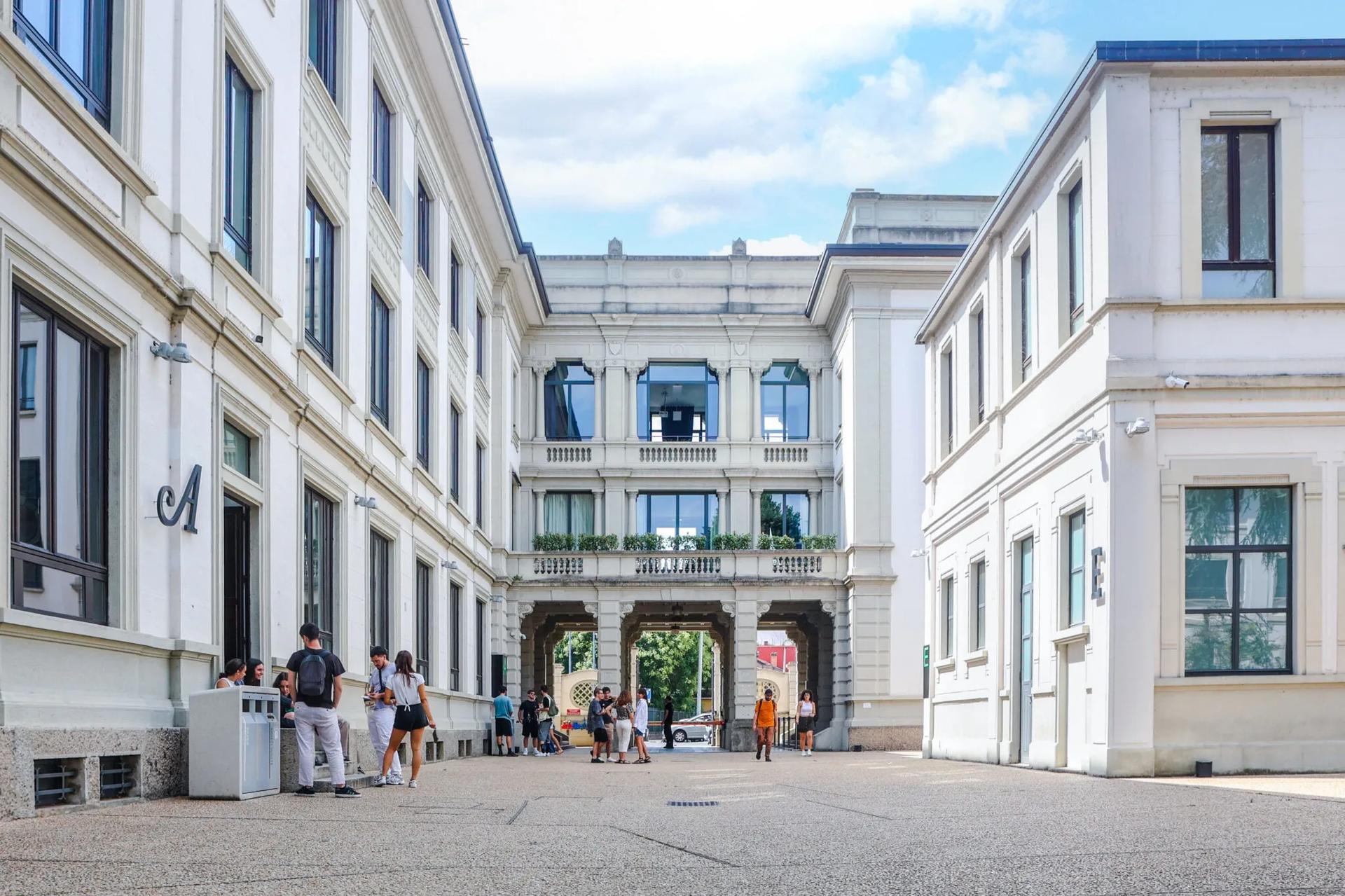
You won't see a single piece of furniture in this impression. Let me say that upfront so you don't ask "where are the photos" later. This isn't a fair tour; it's a sideline read of where Milan pivoted in 2026. I'll try to paint the scenes in your head. Build them or tear them down in your own living room.
If you want a standard fair recap, head to Dezeen, Designboom, ArchDaily; they're there every morning with a fresh gallery report. I've been watching from inside a Modoko production facility for thirty-odd years. What I want to write is not the gold detail of a Rho-Pero hall but an answer to a larger question: where is design heading in 2026? If you can describe an object without showing it, you actually understand it. This piece is that test.
Salone del Mobile's 2026 theme turns on a single word: matter. In English it means both "issue" and "substance". "A Matter of Salone" therefore reads as both "Salone's business" and "Salone's material". The fair tries to hold both under one roof: physical stuff and the thing it says. Looks like a pun, but it's the skeleton of the whole show; every exhibition, every curated zone stages one face of matter.
The numbers, briefly: April 21-26, Fiera Milano Rho, 64th edition. Over 1,900 brands from 32 countries across 169,000 square meters. EuroCucina and the Bathroom show returned together with 269 exhibitors. Euroluce skips this year, biennial, back in 2027. SaloneSatellite gathers 700 designers under 35 from 43 countries. Fuorisalone, the free city-wide network, opened April 20 under the banner "Be the Project", foregrounding process and transformation. From both sides of town the same signal comes through: what matters isn't the object, it's the road to the object.
The matter theme materialised on four distinct stages. Look at all four together, because separately they're fragments; as a set they tell you what Milan 2026 is about.
Salone Raritas, curated by Formafantasma (Andrea Trimarchi and Simone Farresin), opens in halls 9-11. "Collectible design" is the hybrid zone: industrial production meets gallery pricing. A single side table can reach the price of a mid-range car and nobody asks you whether it's furniture or art, it's both. What makes this important is that a commercial fair now opens its door to collectible objects. The hand touching the wood is the same, the story is different.
Salone Contract, with architectural direction by Rem Koolhaas and OMA, launches a large-scale stage for hotels, hospitals, corporate lobbies, airports. Koolhaas is redesigning what a "systemic fair" looks like. We watch this one from Istanbul with a shrug; the moment we see it we recognise the problem. What we've been doing for years has an international name, "contract furniture". Few people in Turkey use the term, but plenty do the work.
Fòco, in the Tortona district, at Archiproducts Milano on Via Tortona 31, is the installation by Studiopepe, the two-woman studio of Arianna Lelli Mami and Chiara Di Pinto. Milan-based, they've worked with brands from Cassina to Dior, and their work always circles "atmosphere". The exhibition is built on a fire metaphor, not the fireplace kind, but fire as "creative spark" and "the pole people gather around". Over 50 brands share the showcase, Samsung is lead partner. Against all the digital rust and multi-screen stimulation around us, one flame and the silence around it. A Turkish brand is also in the showcase; we aren't. But Studiopepe's approach caught my attention, because what they put on the shelf isn't a chair, it's the shelf turned into a landscape. A different language for what our production has been chasing for 45 years.
Aurea, in halls 13-15, is Maison Numéro 20's fictional hotel installation. One room, reconstructed "memory of luxury hospitality". They stage "conscious luxury", understated rather than loud. We already see this in hospitality projects; over the past two years the number of Gulf hotel chains asking for "shine but don't shout" has doubled. Aurea is the staged summary of that expectation.
Four stages, one sentence: Milan 2026 wants to talk about "matter" not only as craft but as narrative. A table isn't a table anymore; it's the surface carrying the story.
If the matter conversation had a single voice it would be simple. It doesn't. Milan 2026 sets two opposite voices at the same table, and the contradiction isn't accidental.
On one side is Pantone's 2026 Color of the Year, Cloud Dancer: 11-4201 TCX, a soft luminous white, the first white Pantone has chosen in 26 years. (I covered this in a separate article.) Cloud Dancer calls for "quiet reflection", says "hush, be still, be pure". On the other side is Fòco's fire-ember-copper palette: burned and just as warm, saying "burn, warm up, gather". Two poles, same year, same city.
The tension isn't random. The Japandi minimalism of 2024-2025 ends exactly in this gap. We no longer say "less is more" and we've moved past "maximalist explosion". In 2026 two moods live under one roof. If the living room is white the dining room can be burgundy; if the master bedroom is Cloud Dancer the study is patinated bronze. Not a color ideology, a combination of emotional states.
The production answer is very familiar. When a client asks for a white villa the question is always the same: "how do we keep white from feeling cold?" And the answer is always the same: white talks through its materials. Matte white wall, textured linen sofa, patinated brass accessory, walnut wood here and there. White doesn't go sterile because each material brings its own warmth. Milan says this same principle in 2026 with both Cloud Dancer and Fòco, one through the ground, the other through the light that falls on it.
The two-mood tension isn't limited to color. Furniture's status itself is shifting, and this is Milan 2026's clearest message. Over the past decade furniture has moved quietly from "a product to use and replace" toward "an object to keep for life". 2026 is the year the shift accelerates.
Salone Raritas is the institutional address of this shift. A duo like Formafantasma opening a collectible-design door in a commercial fair isn't a small event. Designboom's "Room for Dreams" takeover at ME Milan Il Duca and Dezeen's April 22 "must-see 8" list (with installations by Lina Ghotmeh, Ma Yansong, Toyo Ito, Francis Kéré, Pritzker laureates and Pritzker-adjacent architects) point the same way. Furniture, space, lighting, textile are no longer separate disciplines; they're elements of a single scene. An architect designs a chair, a designer builds a building model; the walls between crafts become porous.
For Turkey this is two-sided news. Good side: mass-produced furniture loses value, handcrafted work gains visible value. The natural home court for Turkish workshops. Bad side: becoming an "art-object" takes more than good craftsmanship, it takes telling the story in Milan's language. That's Turkey's weakest muscle. We know the craft; we haven't yet learned to write the story.
Straight talk: Archidecors has no stand at Milan this year. Nothing to hide. Milan is two sizes above the court we're currently on. Each year 700 companies fill Rho-Pero, each paying a serious stand fee; add design, logistics, staff, accommodation and one fair consumes a high six-figure Euro budget. Making that investment meaningful for one Turkish brand requires two to three years of press and network work beforehand. We haven't done that prep yet, so in 2026 I'm in the audience, not on the stage.
Our strategy runs differently. In 2026 we do two things. One, carry the absent currents back home: bring the "new material, new texture, new form" language clients ask for into production early. Two, find the right door and step through slowly in 2027-2028. Either join the Archiproducts Milano yearly showcase (one of those Fòco-style collective exhibits), or co-author a Signature Collection with a Turkish designer and launch it with dedicated Dezeen coverage. Without these first moves a stand is just noise; not sound.
In March, across the lunches we had in the offices of four interior designers in Istanbul and over the dinner on the night we delivered the Katara Hills villa, I saw it plainly: going to Milan is not a goal, it's a tool. People want two things from a Turkish workshop, proper craftsmanship and honest timing. Milan supplies neither; it supplies a stage. Work first, stage later.
That "work first, stage later" approach isn't new. It's what the Italians have done for a hundred years. Which is why Milan and Modoko are closer than they look; both cities lean on the same skeleton: family industry and workshop logic.
Most big Italian brands are still third- or fourth-generation family businesses. Cassina 1927, Molteni 1934, Poliform 1942, Minotti 1948. All founded in a family name, still in the same families' hands. The "artisanal revival" or "craftsmanship resurgence" now being discussed in Milan never actually left for the Italians; it just started being spoken about again. Our district carries a workshop culture that has barely changed in 30 years. The Luigi XV chair leg we call the "horse-hoof" is still carved by hand; the final sanding that closes the router mark still passes through the master's hand. Milan's "hand-drawn imperfections" and "patina over time" language is, for us, the natural voice of the workshop. Show it to a Japanese client, they'll get it; the wood tells itself.
The difference is in how the story is told. An Italian brand presents a table for 20 minutes, recounting five generations of family history behind the piece, the geographic biography of a wood species, the biography of the master. We summarize the same table as "custom-made, Calacatta marble, 2-month delivery". Yet that table also has a story in our production: which tree, which master, for which client, which villa. Not telling the story is what Milan teaches us. After 2026 we'll tell it louder.
Compressing the current into one line: organic forms are back, but this time shaped in wood and cast metal, slower curves. Modular design continues, but it has moved up to "each piece is an object on its own, all speaking the same language" (the upper level of the function-showcase split I discussed in the marble vs quartz article). Textiles want hand-drawn motifs and weaving imperfections; the bouclé rise I mentioned in the fabric guide is accelerating. Sustainability is no longer "green" but the full life cycle of a material. There is a natural place for Turkish furniture in this synthesis: somewhere between Scandinavian austerity and Italian drama, a language that combines Anatolia's material wealth with Western taste's demand for detail. Doing it is not new. Saying it is.
Milano Design Week ends on April 26. The planes fly home. Photos circulate on Dezeen's pages for a week, then cede to the next story. Stands come down, collectible pieces return to their galleries. What stays behind?
From inside production, two things. First, a question, "what do we do in 2027?" Milan renews this question every year; the answer lives in the decisions interior designers and workshops make over the next 11 months. Second, a direction: 2026's direction is clear. Furniture moving toward art-object, production that takes material's full life cycle seriously, craftsmanship that keeps the handprint visible, family industry regaining value. That direction means Turkish workshops play on home court. What we need to say is new; what we need to do is old. We've been doing it for years; after 2026 we'll say it louder.
The fair is over, the stage dismantled. The question remains: "With whom do we build this?" The same question glinting in every interior designer's eye, returning to every corporate client's meeting. If there are Turkish workshops ready to answer, we've been in production for 45 years preparing that answer.
Milan, someday, through the right door. If you want to start the 2026 design conversation in our space, send us a brief through our B2B page. If you're an interior designer, our partner program fits this transition exactly; we welcome you to our production facility when you're back from Milan. We're doing our part to make our recent villa delivery heard in Milan; you hear it too.
When is Milano Design Week 2026, and how many days?
Salone del Mobile ran April 21-26, 2026, six days, at Fiera Milano Rho. Fuorisalone exhibitions opened April 20, so the city side started one day ahead. In 2027 the calendar may shift by a few days; Salone usually publishes the official schedule in January.
What's the difference between Salone del Mobile and Fuorisalone?
Salone del Mobile is the main ticketed fair at Fiera Milano Rho, 169,000 square meters of exhibitor space. Fuorisalone is the free, city-wide network of installations and exhibitions spread across Brera, Tortona, Isola, and Porta Venezia districts. Most brands do both, take a stand at the fair and open an experiential exhibition in the city. Real cultural conversation happens at Fuorisalone; commerce happens more at Rho-Pero.
Why are Turkish brands rare at Milan?
Three reasons. One, stand cost reaches a high six-figure Euro budget for a single fair; for most Turkish brands this investment doesn't pay when compared across fairs. Two, being visible at Milan requires more than a stand, it needs 2-3 years of press and network work beforehand, and we're weak in that area. Three, domestic market still generates profit, many companies haven't yet built the discipline to push outward. In recent years Turkey's global premium brands have entered Milan seriously, others are following.
When will Archidecors go to Milan?
No plan to hold a stand in the near term. But in 2027 we're considering two steps: one, joining the Archiproducts Milano yearly showcase profile (Fòco-style collective exhibits); two, creating a "Signature Collection" with a Turkish interior designer or architect and launching it with dedicated Dezeen coverage. Building our own stand requires these two gates to work first. The strategy is "stand near the stage first, step onto it later".
When does the 2026 design direction reach Turkey?
Six to twelve months lagged. What's discussed in Milan in April starts appearing in Turkish designer briefs around November-December. What we expect to surface in early 2026: Cloud Dancer paired with warm wood, patinated brass detail, rising demand for bouclé, organic curved dining tables and sideboards, and, pushed by collectible design, a preference for fewer but higher-value pieces. Villa clients pick up the trend faster; apartment clients lag by 18-24 months.
Why are there no images in this article?
Three reasons. One, we didn't build a stand in Milan, so we don't have original photos; pilfering others' frames is not ethical. Two, the internet is already drowning in Milan imagery this year (Dezeen, Designboom, Archiproducts supply high-quality visual streams nonstop), no need to add to the pile. Three, and most importantly, can we understand furniture design through words alone as well as through images? That's a creative test for us. If you can describe an object without showing it, you understand that object. This article is that test's trial run.
Milan 2026 is over. The stage dismantled. In production we're prototyping three pieces, a patinated brass-legged linen sofa, a Cloud Dancer-bodied wood console, an organic-curve marble dining table. You'll see the details in our catalog page in a few weeks. The language Milan announces finds its answer in our production like this.
From Classic to Minimalism, Art Deco to Japandi, a comprehensive guide to the most influential interior design movements worldwide.
What changed in 2026 furniture trends? Warm minimalism, Japandi, organic forms and the natural materials revolution, expert analysis.
Browse our crafted furniture collection, each piece designed with the same principles discussed in this article.
Design inspiration, new collections and expert guides, directly to your inbox.
Our team of expert designers and craftsmen are ready to bring your vision to life.