Half the clients who walk into our showroom ask the same question: "Should I go with marble or quartz?" There's no one-word answer. But there are plenty of expensive wrong answers.
I'm Erhan, I run the production side at Archidecors. Every day we face this decision on at least one coffee table, console, or kitchen island countertop. After 30-odd years working with both materials, here's what I know for certain: neither is perfect. Neither is terrible. It all comes down to where you're putting it.
Marble vs Quartz, The Short Version
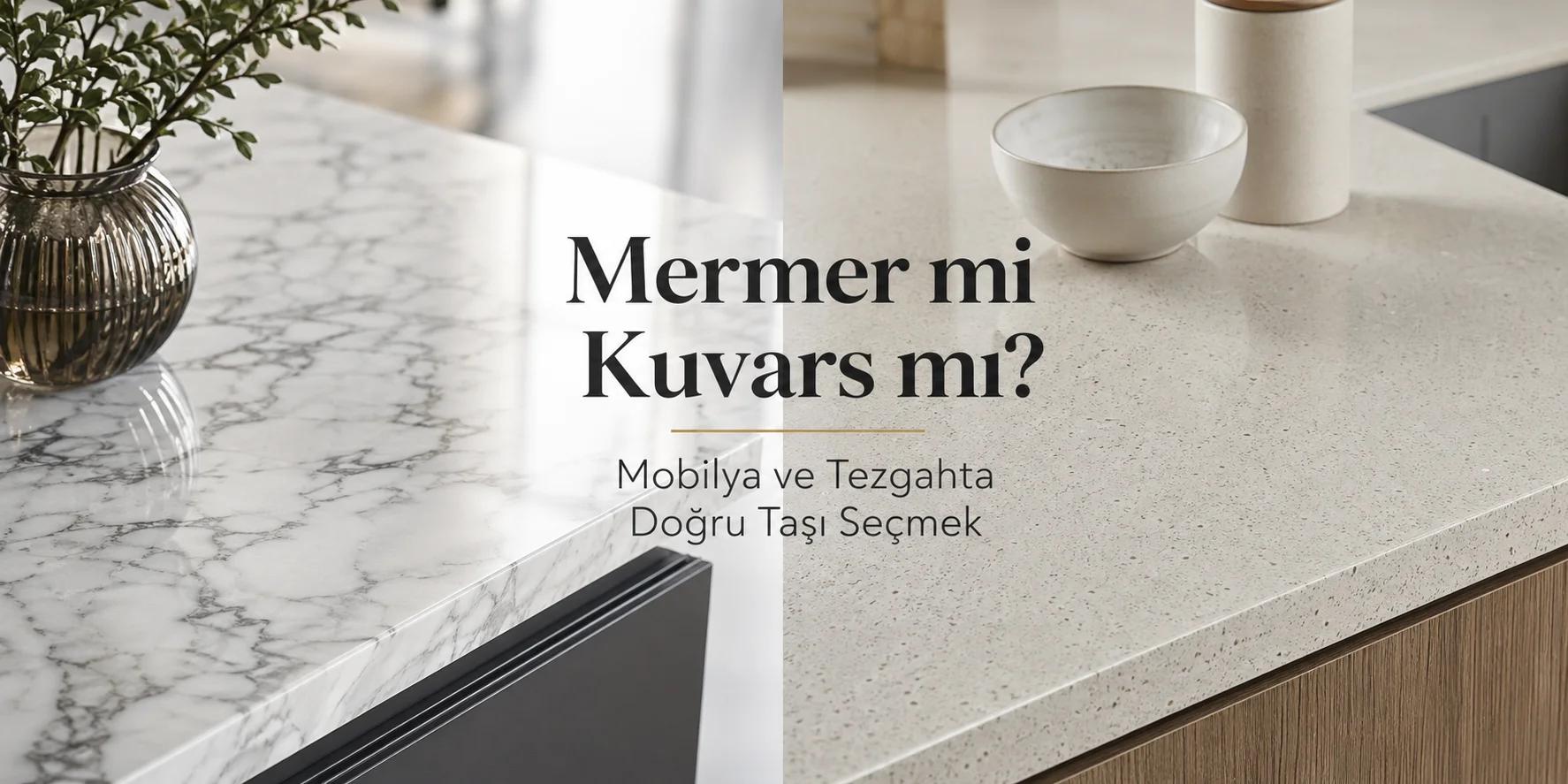
Marble is natural stone. Limestone transformed by millions of years of heat and pressure. Every slab is one of a kind; its veining and color shifts never repeat on the next one. Afyon white, Mugla grey, Carrara, these are geography.
Quartz is engineered. 90-94% ground quartz crystals bonded with polymer resin and pigment. Factory-cast, molded, polished. Every slab identical. Want Carrara-look veining? Done. Pure black? Done.
Think of it this way: marble is nature's signature, quartz is engineering's.
Porosity, This Is the Real Issue
Marble is porous. Spill coffee on unsealed marble and you'll see a stain forming within 10 minutes. Lemon juice? Worse. Acidic liquids attack marble's calcite structure, leaving dull spots we call "etching" in the trade.
Quartz is sealed by resin. Non-porous. Coffee, wine, sauce, wipe and it's gone. Doesn't harbor bacteria either. For kitchen countertops, quartz wins by a mile on hygiene alone.
But, and this is a big but, quartz resin starts degrading above 150°C. Put a hot pan directly on it and you'll get a ring mark. Marble? Handles 500°C without flinching. Hot pots, hot pans, no problem at all.
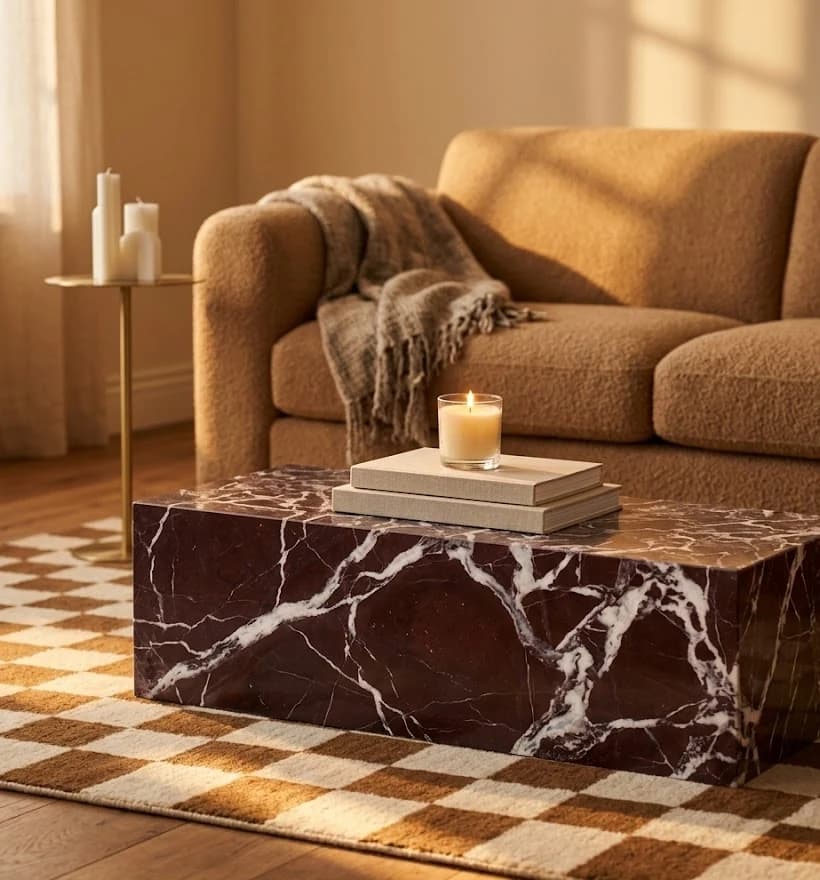
Our Rosso Levanto plinth table. The veining runs differently in every block; quartz repeats its pattern by design, marble never does.
Where Does Each Belong in Furniture?
Coffee tables, consoles, dressers, surfaces where you're placing glasses and decorative items. We typically use marble here. Why?
Natural veining gives a coffee table character that no CNC or digital print can replicate. When a client looks at that table, they see real stone, not a reproduction. In the luxury segment, perception is everything.
There's a practical side too, you're generally not squeezing lemons on a coffee table. But for clients who want extra protection, we apply Akemi sealant. It needs refreshing every 2-3 years. Cost? A modest amount per square meter. Not a dealbreaker.
Kitchen islands, bathroom counters, anything near water and knives and acid: quartz. No debate. One client insisted on Afyon white marble for their kitchen island. Six months later they called about stains. We sealed it, but those first six months left marks. Had to re-polish, a meaningful extra cost that quartz would have avoided entirely.
Price Comparison, Watch for the Trap
Marble prices vary wildly by variety. Standard Burdur beige sits at the accessible end, Carrara in the mid-to-upper range, and Calacatta at the premium tier. But budget marble exists too.
Quartz? Turkish brands (Belenco, Cimstone) sit in the more accessible mid-range. Imported Silestone, Caesarstone land in the upper segment.
Here's the trap: marble fabrication costs more. Breakage risk means careful transport, cutting produces more waste, and CNC edge profiling needs slower speeds. Total cost of marble ownership runs 20-30% above sticker price.
Quartz is more uniform, easier to fabricate. Less waste. But thickness matters, 20mm is standard, 30mm gives a premium feel. At 30mm, quartz is heavier than it looks. Factor that into transport and installation.
Maintenance, Let's Be Honest
Quartz: wipe, done. Neutral detergent, microfiber cloth. Does it scratch? Yes, but it takes effort. Over years you might see dull patches, professional polishing restores it.
Marble: sealing is mandatory. Acidic spills (vinegar, lemon, tomato sauce) must be wiped immediately. I recommend professional polishing once a year. People say "too much maintenance", they're not wrong. But marble develops a patina over time. A 10-year-old marble coffee table, even with some wear, gains character. Quartz stays the same forever, some call that an advantage, some don't.
On a villa project in Zekeriyakoy, we used Italian Statuario marble for the living room coffee table. Three years later the client called, the marble had dulled slightly but they said "we love it, the character has grown." That's the marble spirit. Quartz doesn't do that.
Which Should You Choose?, Decision Framework
Kitchen countertops, bathroom vanities, sink surrounds: Quartz. Non-negotiable. Water and acid resistance saves you money long-term.
Coffee tables, consoles, TV unit tops: Marble. Natural veining multiplies the luxury perception. Seal it, check it once a year.
Bar counters, kitchen islands (with hot cookware): Marble is possible but demands sealing + careful use.
Hotel room furniture: Quartz. Near-zero maintenance cost, housekeeping teams work faster. See our hotel furniture guide for more.
Outdoor terrace: Neither, go with granite or Dekton. You need UV and frost resistance.
One Last Note from Production
I hear it often: "Quartz looks fake." Five years ago, fair point. But today's Silestone, Caesarstone, or Turkish Belenco produce astonishingly realistic veining. Still, pick up a piece of each and compare. Marble's coolness, its weight, the way light hits those veins differently at every angle. That's something else entirely.
My ideal formula: marble for your home's showcase spots (living room table, entry console, dining surface), quartz for functional surfaces (kitchen, bathroom). Projects that combine both always deliver the best results.
Check out our marble care guide for detailed sealing and polishing advice. And our fabric selection guide covers why upholstery material matters just as much as the surface stone.
Frequently Asked Questions
Does marble stain easily? Yes, unsealed marble is porous and absorbs liquids like coffee, wine, and acidic substances. Sealing reduces this significantly but doesn't eliminate it completely. For stain-prone areas like kitchen countertops, quartz is the safer choice.
Can quartz handle heat? Partially. Quartz withstands up to 150°C but the resin binder can scorch above that. Always use trivets for hot cookware. Marble handles up to 500°C without issue, it's naturally heat-resistant.
Which is more expensive overall? It depends on the marble variety. Standard Burdur beige can be cheaper than quartz, but premium Calacatta or Statuario costs significantly more. Including fabrication, marble typically runs 20-30% higher due to careful handling and higher waste during cutting.
What do you recommend for hotel projects? Quartz for guest room counters and bathroom surfaces, marble for lobby and restaurant decorative features. The hybrid approach balances maintenance costs with visual impact, which matters in hospitality.