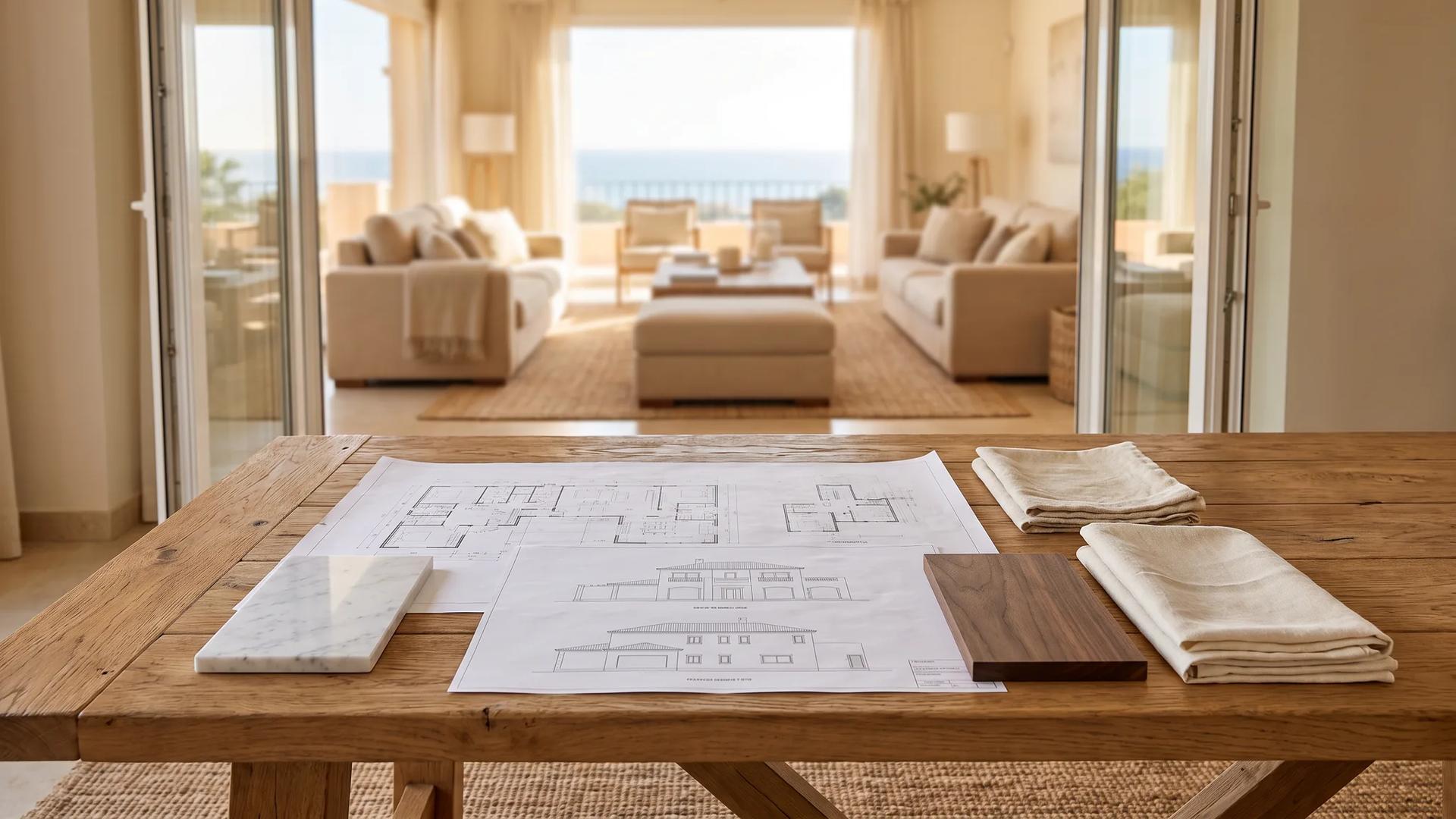
You've become a villa owner. Now the critical question: where do you start? Seen from the production side of a factory that has been making furniture since 1981, the answer is mostly about order: what happens when, how long it takes, and where the money goes.
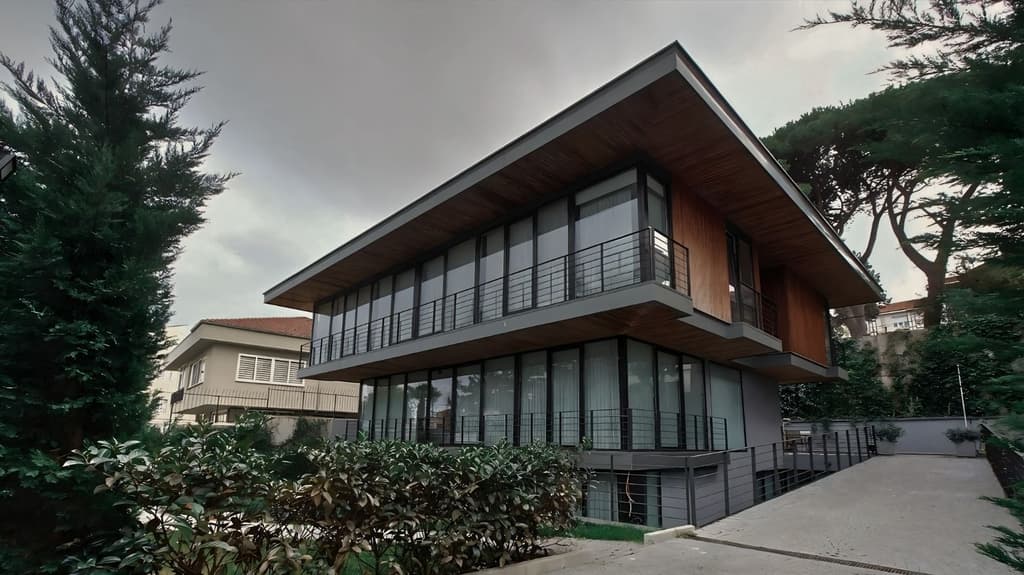
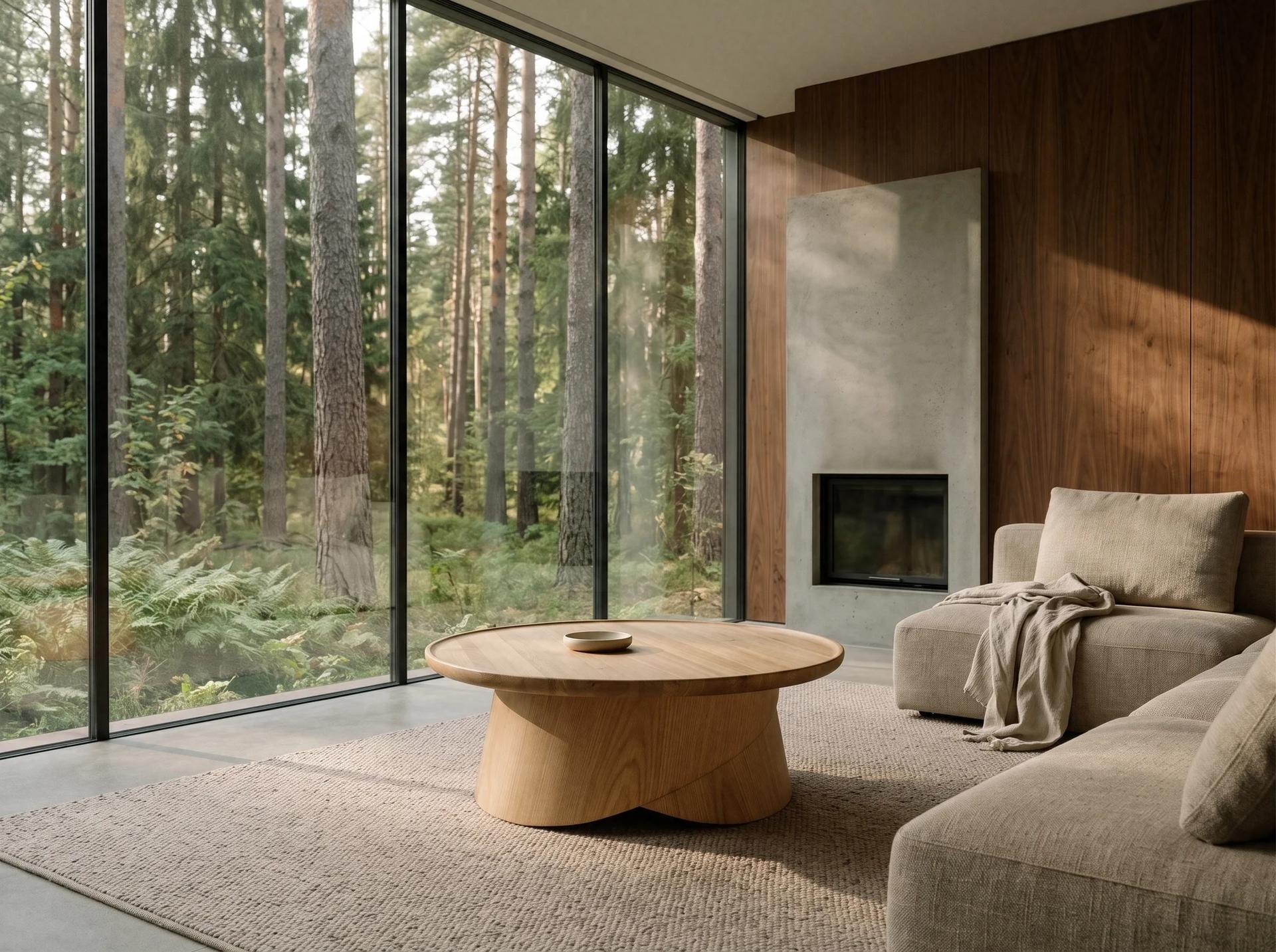
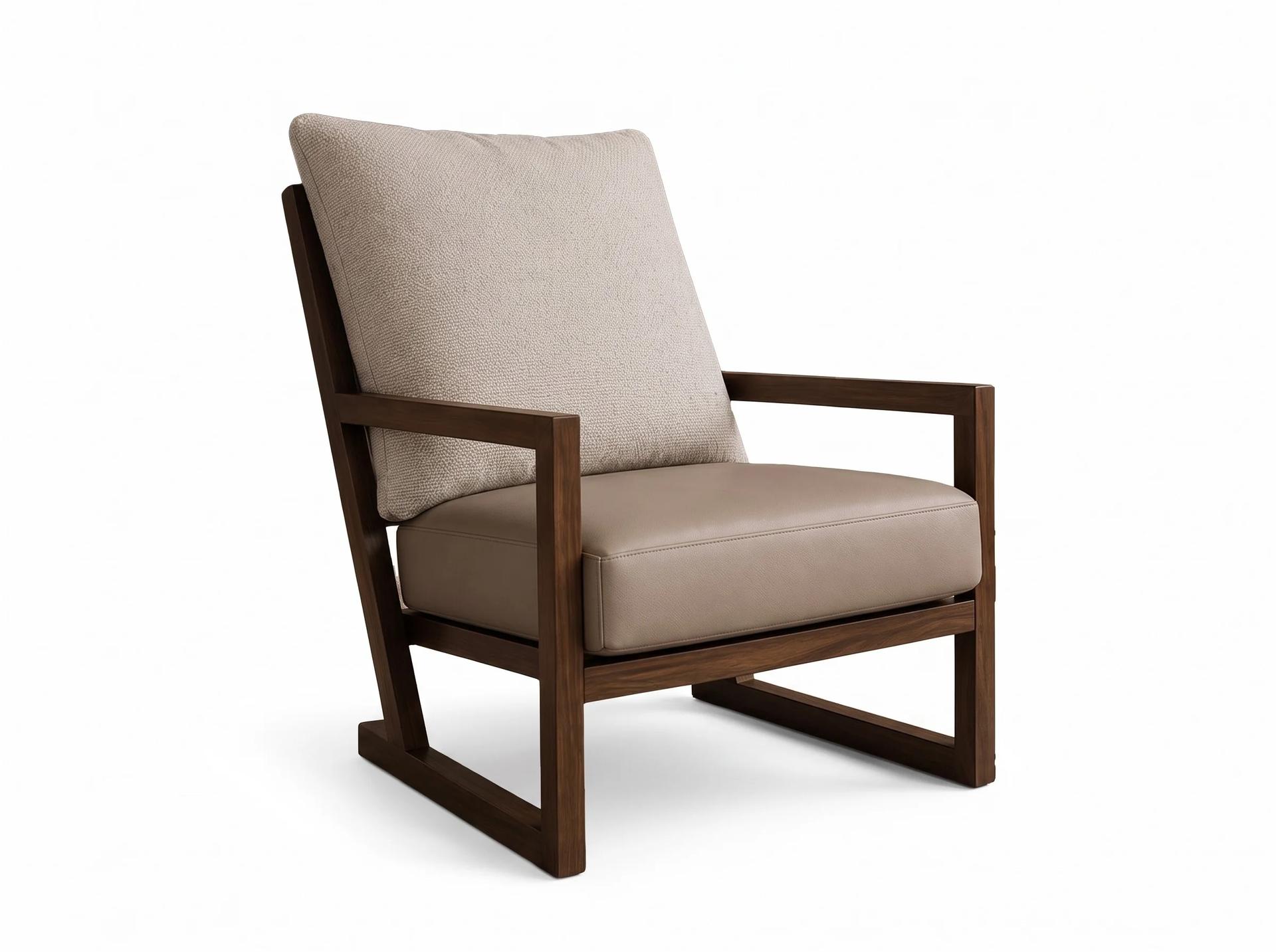
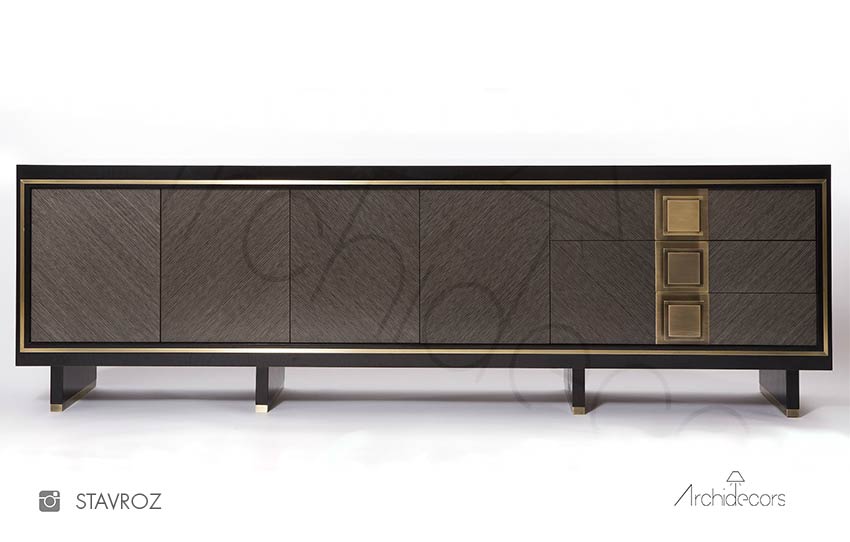
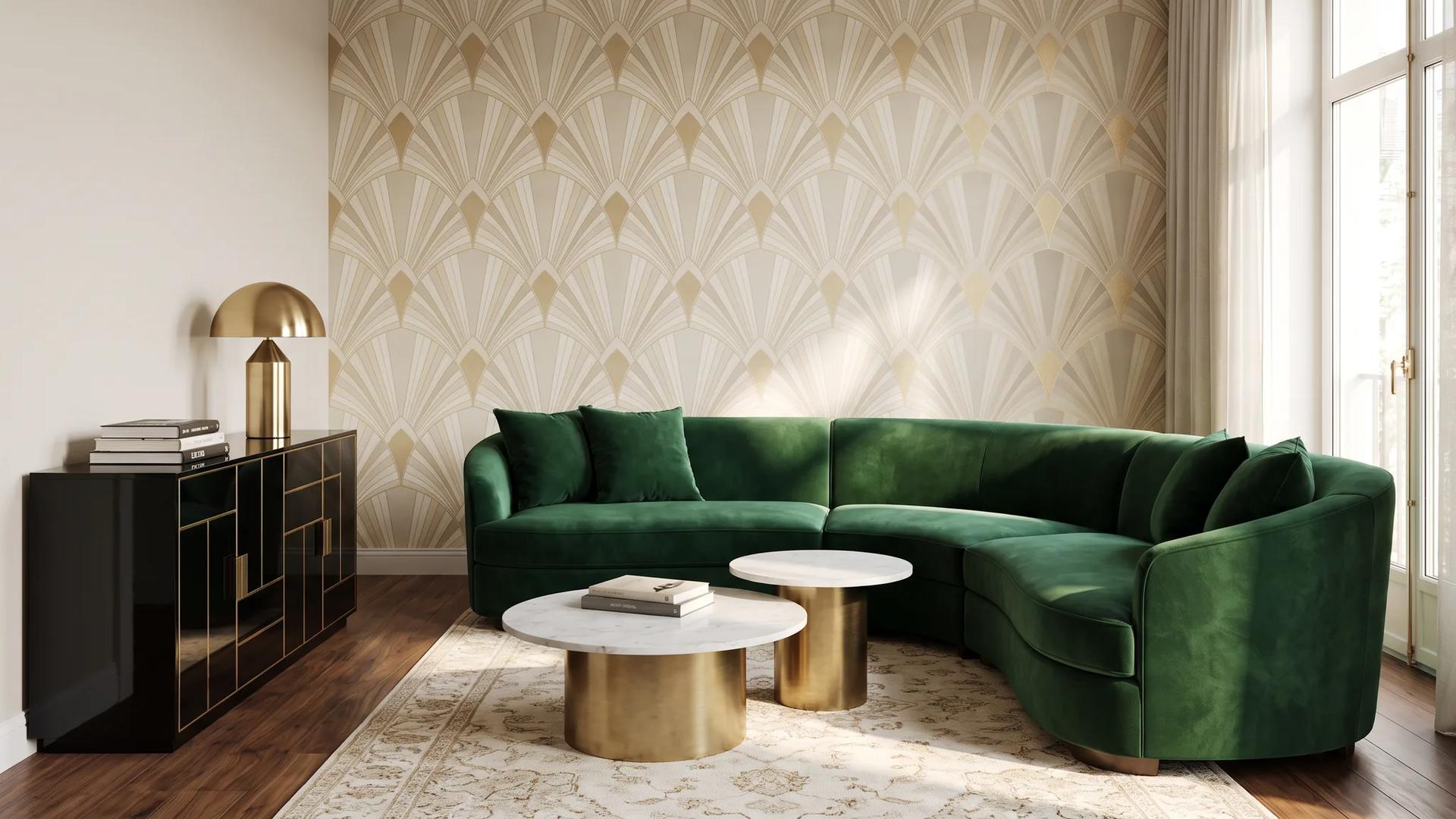
Our Emirgan villa project. A glazed modern shell sets the boundaries of the interior scheme from day one.
The 6 Phases of a Villa Project
A serious villa interior design project splits into six main phases. Skipping a phase is the most common mistake; later you're saying "we waited 3 months."
Phase 1, Discovery & Brief (short, usually a few weeks). The interior designer visits the villa, measures all rooms, photographs electrical and lighting plans, and digitizes the floor plan. In 2-3 sessions with you they understand your lifestyle, family structure, hobbies and habits. This phase looks short but the DNA of a successful project is established here.
Phase 2, Concept & 3D (length depends on revision rounds). The designer presents three separate concepts, modern, classical, eclectic, etc. Each concept includes mood board, color palette, material samples, and 3D renders of 2-3 key spaces (living, dining, master bedroom). You choose direction. A wrong preference here is irreversible, changing an already-finished living room because the palette was wrong means substantial rework from scratch.
Phase 3, Technical Drawings & Furniture List (the longest desk work in the design stage). Once concept is approved, technical drawings and furniture lists are produced per room. This list is critical: for each item, dimension, material, fabric, color, quantity. "Calacatta marble dining table, 220×110 cm, PVD gold brass base, 1 unit" level specification. The quality of this list determines the speed of procurement.
Phase 4, Supplier Selection & Order (collecting and comparing quotes). Furniture list goes to 3-5 manufacturers. Price, production time, references, and quality are compared. The critical decision on villa projects: "single manufacturer or split across multiple?" The answer is usually a single manufacturer, for coherence and warranty simplicity. Archidecors receives full villa projects; the furniture language stays consistent, delivery happens once, and every piece sits under the same 2-year manufacturer's warranty with one point of contact.
Phase 5, Production & Quality Control (two to three months for a whole villa). Once order is confirmed, production starts. For several villas or a larger project, the schedule is set per project once the scope is fixed. The manufacturer should send photographed production reports every 3 weeks (our clients set this as a condition for us; ask for it too). Quality inspection at the factory before installation is important, color match, material integrity, dimensional accuracy. A defective piece doesn't delay delivery, it's replaced.
Phase 6, Installation & Styling (depends on the size of the villa). Furniture moves to the villa, installed with the designer team. "Styling" comes last: rugs, pillows, art, small decorative objects. Those are your interior designer's picks, not something we make; we place the furniture to their layout. This detail looks like 10% of the project but it's what gives the finished feel.
Realistic Timeline
A single number would mislead you. How long the design phases run depends on the designer's pace and how quickly you decide, and on a 4-bedroom, 400-500 m² villa, rushing the concept and technical drawings costs more later. Our share, the furniture production, takes two to three months for a whole villa. If someone promises the whole job in a very short time, either they run parallel teams, which shows up in the cost, or they're cutting corners. The equation holds on every villa: speed = cost.
Budget Lines
Villa project budget splits into three: (1) Design fee, interior designer, 10-15% of total. (2) Furniture and decor, 60-70%, varies by category. (3) Lighting, textiles, decorative, 15-25%.
For a 4-bedroom luxury villa, the furniture + decor budget sits in the upper segment, set by the level of materials and craftsmanship; the designer fee is separate. Working with imported brands moves it into the premium segment. Working with a Turkish custom furniture manufacturer delivers meaningful savings, and every piece arrives sized to the villa.
Villa Interior Examples From Our Bodrum and Doha Projects
The frames below come from two real villa projects of ours: two different interior languages, one production discipline. No stock imagery, all delivered spaces.
Gölköy, Bodrum: stone and sand tones
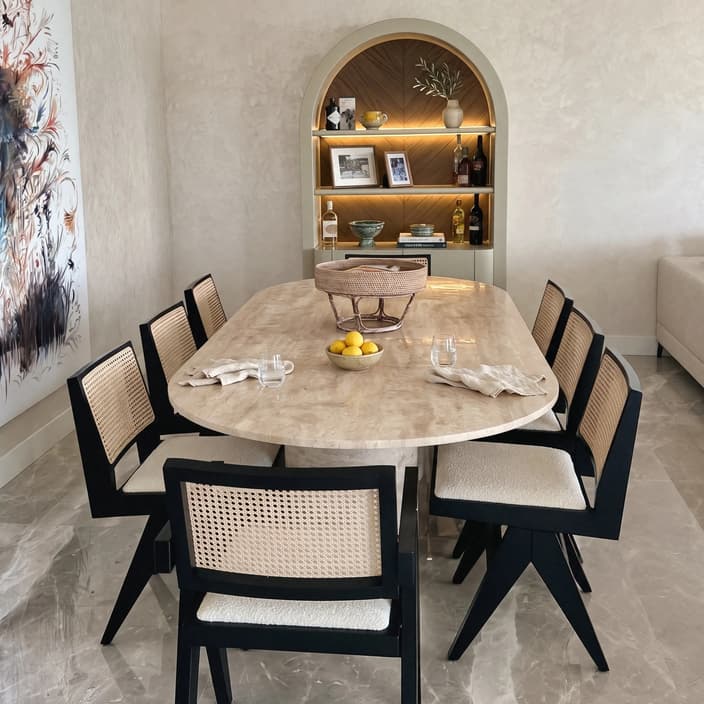
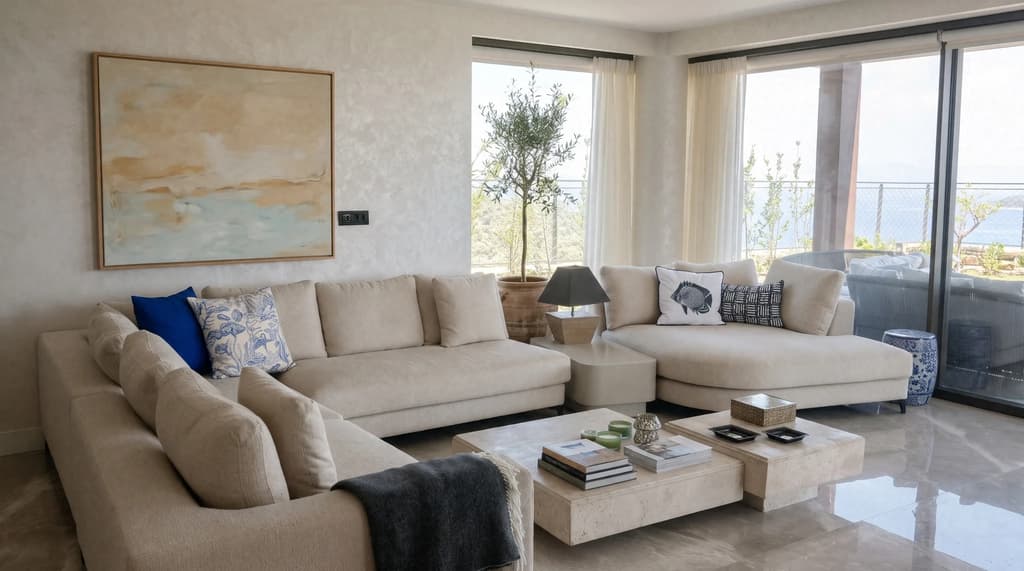
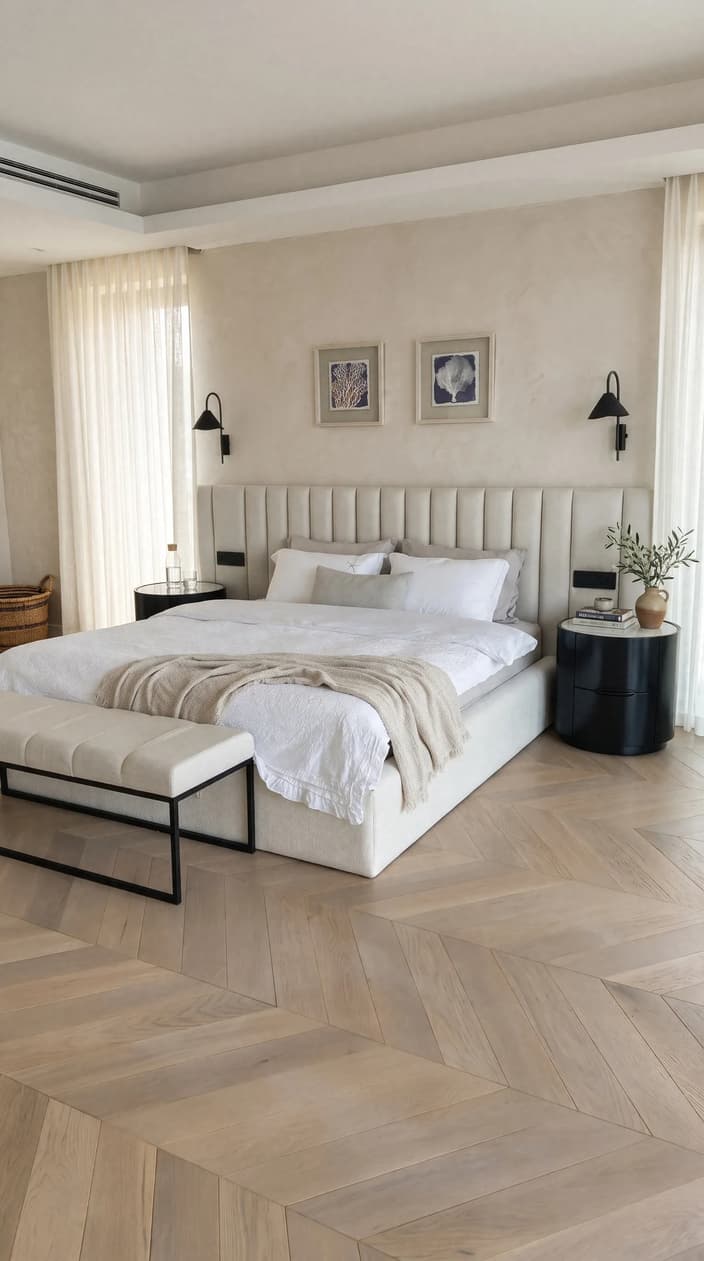
The first three frames come from our Seba residence project in Gölköy, Bodrum. The shared language is quiet: pale stone and sand tones, soft upholstery, black accents. Because the furniture was made to the dimensions of each room, every piece sits in place without leftover gaps. The process and our other projects are on the villa furniture page.
Dining area. The arched niche and the oval travertine dining table follow the same proportions.Living area. A low L-shaped sofa fills the corner in one piece without blocking the view.Bedroom. A wall-to-wall upholstered headboard anchors the bed at the centre of the room.
Doha, Katara Hills: warm timber and cream upholstery
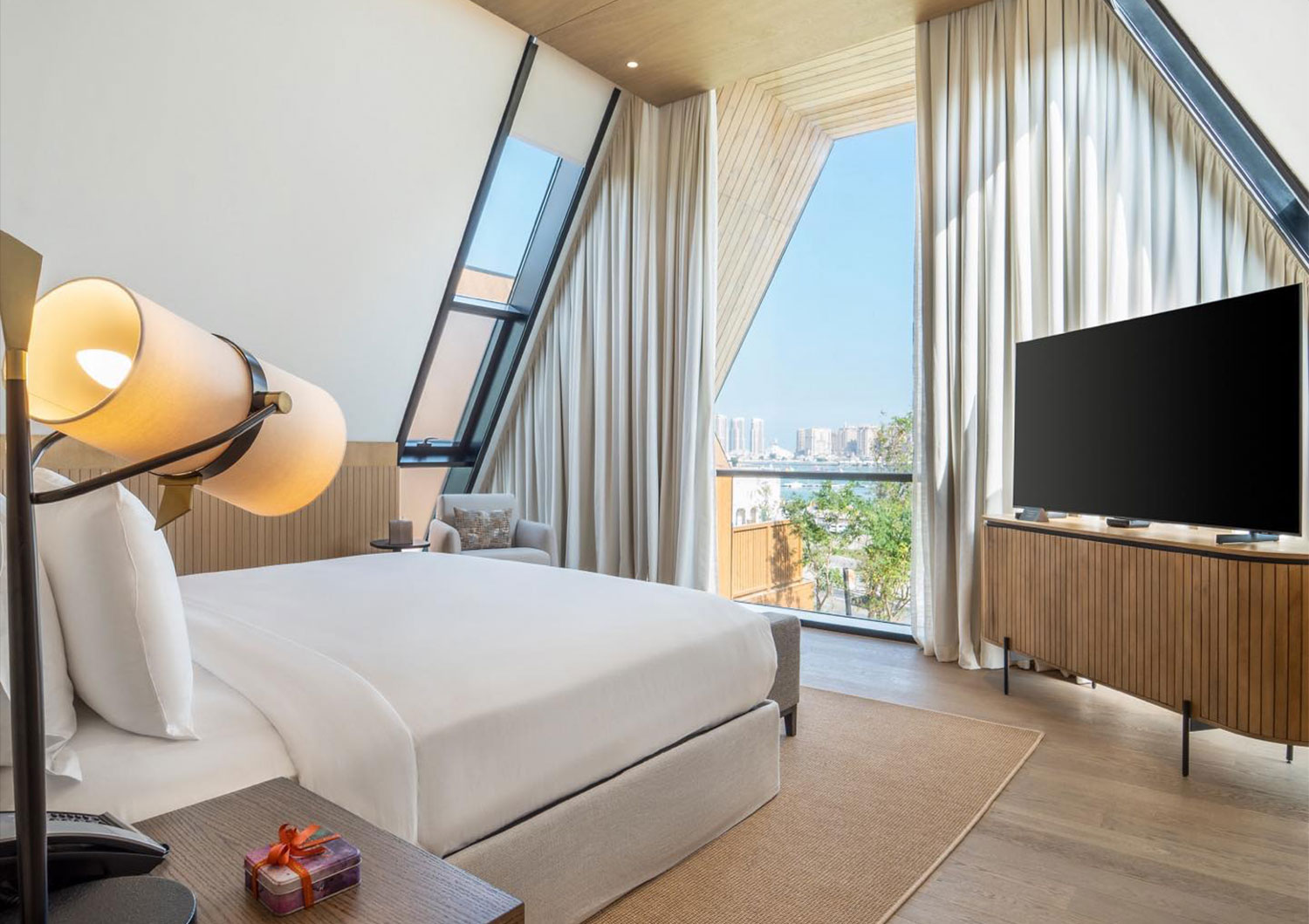
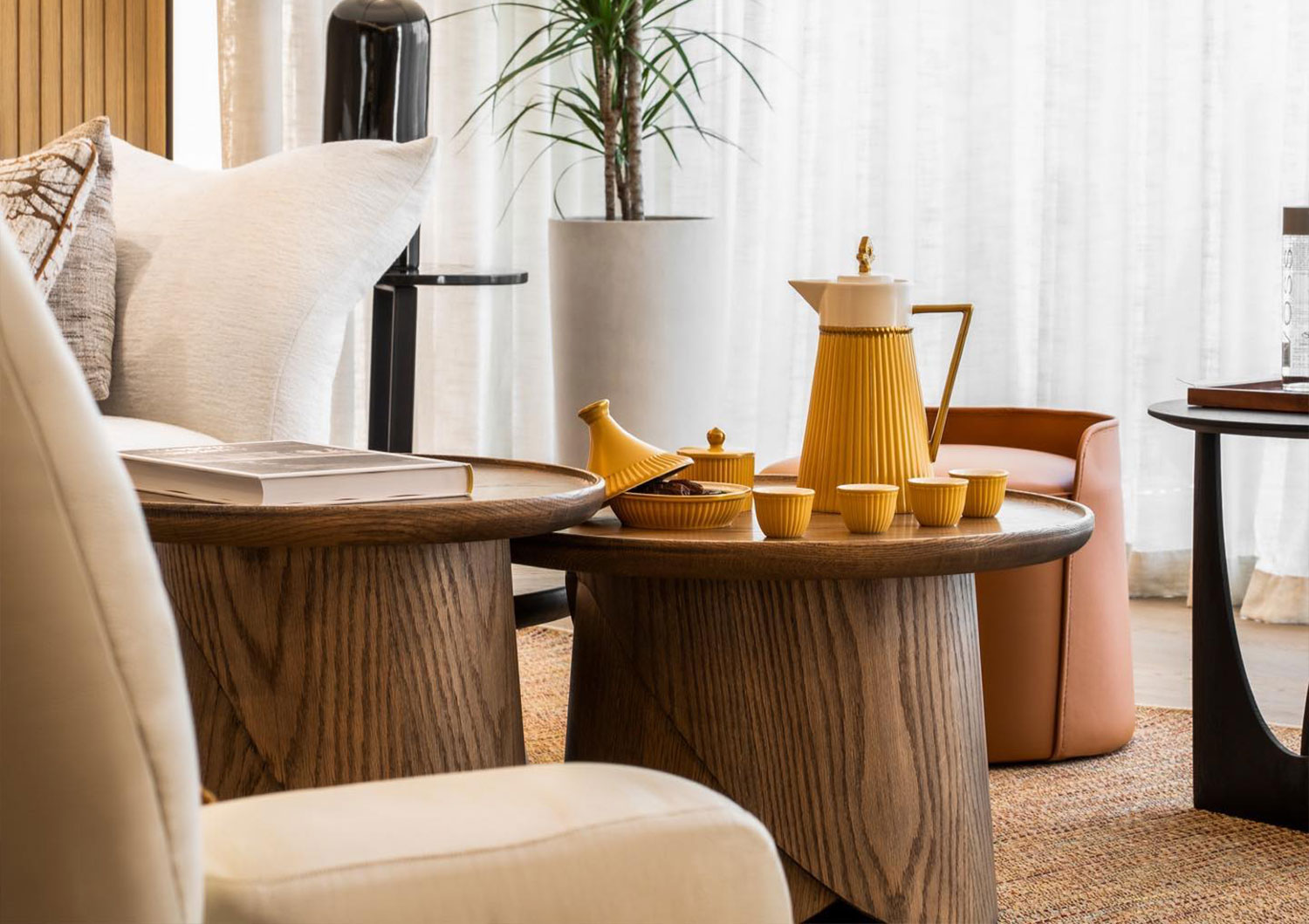
At Katara Hills Hilton in Qatar we delivered FF&E for 12 villas over 12 months. The language here is warmer: vertical timber battens, fluted timber fronts, cream upholstery and cognac accents. The full story is in our Katara case study.
Villa bedroom. The fluted timber TV unit shares the warm tone of the batten wall.Seating corner. Thick-bodied round timber tables in two heights, made to nest.
What the two projects share is method, not style: the furniture is designed together with the room's dimensions and light. When you pick a language for your villa, weigh the view, the hours of sun and how the house will be lived in, then carry that language through every room.
Who Should You Work With?
Three types of professionals for a villa project: (a) Solo interior designer, flexible but limited capacity. (b) Studio interior designer, more corporate, team-based, can handle large projects. (c) Turnkey firm, design + production + installation under one roof. Some of our clients come with an interior designer (partner collaboration), others come direct, and for them our design studio doing measurement + 3D + production. How this works at villa scale is laid out on our luxury villa interior and furniture page. The choice depends on your budget, style, and how involved you want to be.
Three Common Mistakes
Mistake 1: "We'll buy furniture later" and deciding after construction is finished. Correct: furniture design should run parallel to construction, electrical outlets, lighting points, wall colors should be chosen based on your furniture preferences. Otherwise you get "I wish the outlet was there" after furniture arrives.
Mistake 2: Achieving "balance" room by room. Living modern, dining classical, master bedroom eclectic... The villa is a whole. Different language in every room makes the home look scattered. An interior designer brings a holistic view, don't skip this.
Mistake 3: Choosing fabric and materials on screen. Velvet, bouclé, linen, natural wood, colors look very different in photos. Always request samples and compare under light, against home colors.
Frequently Asked Questions
How long does a villa interior project take?
The total depends on the design phases and how quickly you decide; concept and technical drawings alone can take a few months. Our share, the furniture production, runs two to three months for a whole villa, and for several villas or a larger project the schedule is set per project once the scope is fixed. Parallel teams can speed things up, but that shows up in the cost.
How much does a villa interior project cost?
For a 4-bedroom luxury villa, the furniture + decor budget sits in the upper segment; the chosen materials, fabrics and craftsmanship level set the exact figure. The designer fee is 10-15% of this, calculated separately. Working with imported brands moves it into the premium segment; Turkish custom manufacturing delivers meaningful savings. For a current, precise quote, send a brief and we respond within 24 hours.
Do I need an interior designer, or go direct to a manufacturer?
Both are possible. At villa scale, complexity is high, an interior designer provides holistic view and saves time. But if you don't have a designer budget, some manufacturers, us included, offer design support through their own studio and 3D team.
Which style suits a villa interior?
The view, the light and how the house is used decide it. Two languages stand out in our projects: pale stone and sand tones, travertine and soft upholstery in Bodrum; warm timber battens, cream upholstery and cognac accents in Doha. Whichever you choose, carry the same language through every room, because a villa reads as one whole.
Should I choose custom-made or ready furniture?
For a villa, custom is recommended. Why? Villa dimensions differ from standard apartments, living rooms 50-80 m², dining 30-40 m². Ready furniture looks proportionally small in these spaces: a standard three-seater gets lost in a 60 m² living room, while a wall-length, made-to-measure corner sofa holds the space in one piece. Custom-made adapts every piece to the space.
What stage is your villa at: shell construction, concept sign-off, or a furniture list already in hand? Share a brief with your floor plan for your villa interior project; the Archidecors team responds with capacity + quote draft within 1 business day. If you have an interior designer, let's work together through our partner program: the drawings stay theirs, the production is ours.