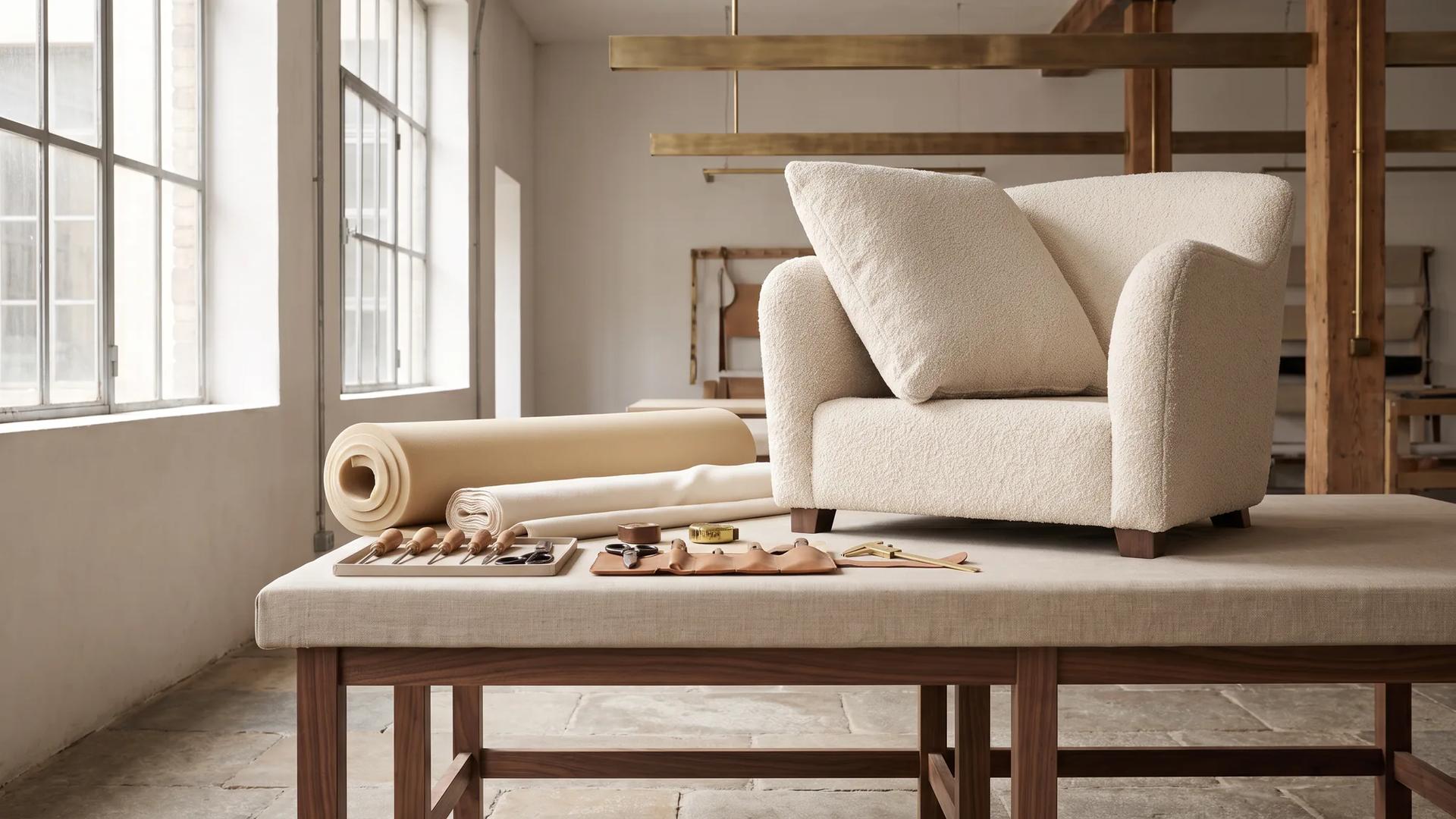
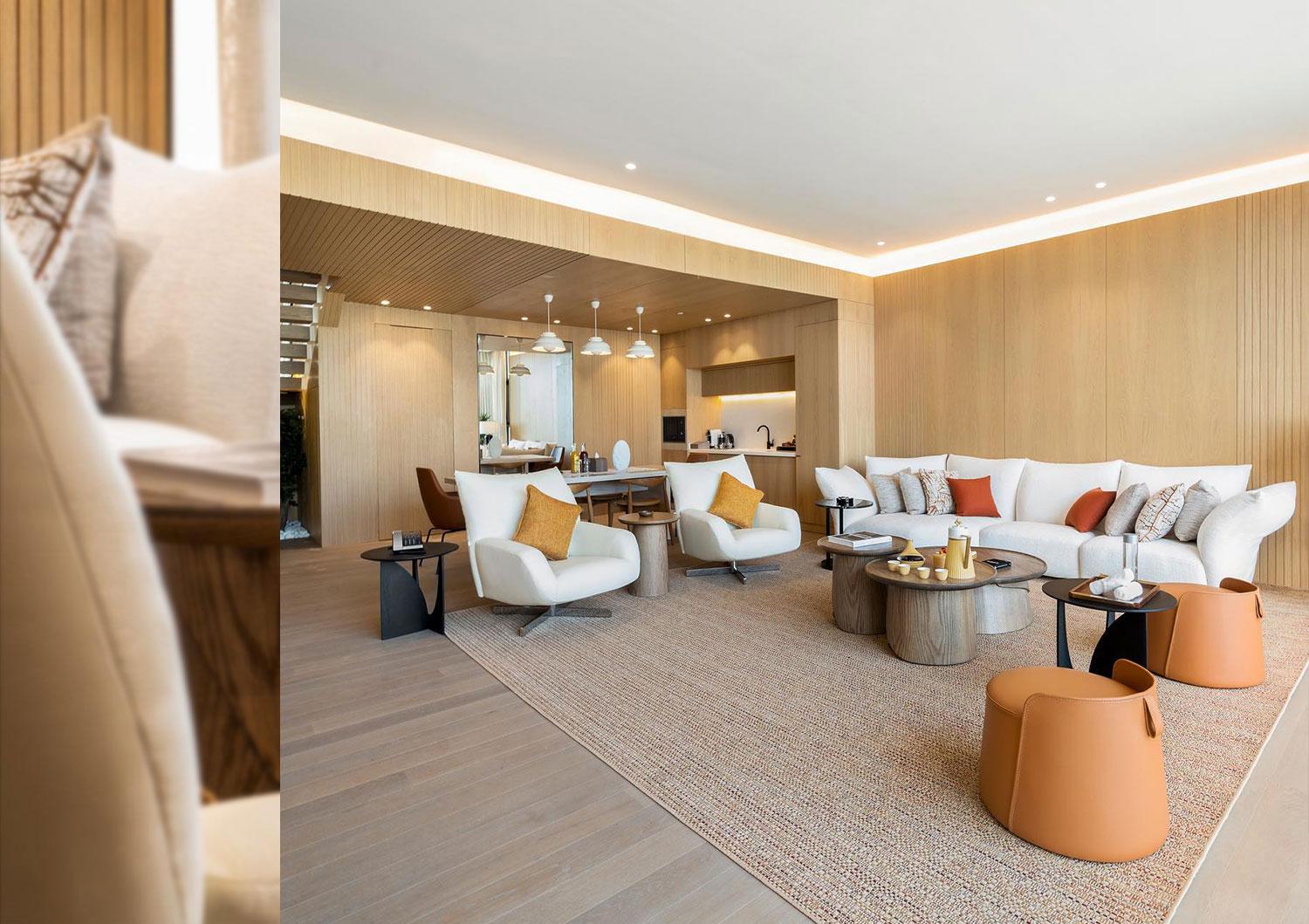
Two customers walked into our Modoko showroom last week. One was looking for a bedroom set in Beşiktaş, the other for a sitting group for a villa in Yeşilköy. Both started with the same sentence: "We bought from such-and-such brand, the sofa sagged 18 months later, we call but no one answers, we go to the store and they say 'tell the production team'."
Both have the receipts. One paid for a premium-segment sitting group, the other for an upper-segment complete bedroom. The customer's money has gone but they don't feel owned by their brand. As they tell it, their voices crack; because the issue is not money, it's a question of respect.
Those two are not the reason I'm writing. The reason is this: that same week I opened Şikayetvar (Turkey's largest consumer complaints platform) and reviewed the report card of the Turkish premium furniture industry. I'll tell you what the report card looks like, without naming names but without hiding the data. Because at the head of a 45-year-old family workshop, when the customer can't find the answer they're looking for, I have to say "we are here".
The Şikayetvar Mirror: When the Industry's Report Card Opens
Şikayetvar is Turkey's largest consumer complaints platform. 16 years of database, millions of users, sector-based scoring. For premium furniture brands it's a kind of public report card.
What comes out when the card opens? From publicly accessible data, no names:
- A 60-year-old, Zorlu Center store, Italian-licensed Turkish premium brand: Şikayetvar score 2/100. That's two out of one hundred. Bottom of the industry. Of 13 complaints, only 1 was resolved.
- A 30+ year, 184K Instagram followers, 13-store premium brand: Şikayetvar score 71/100. Customer complaint response rate 21%. So out of 100 customers, 79 experience "no one is engaging with me".
- A 30+ year, 19-store, 9-country exporter: Şikayetvar score 82/100, response rate 100%. Strong on this front. But while fixing service, they neglected blogs, and digital content output is zero.
- A 4-continent, 34-store Turkish brand: Şikayetvar score 94/100. Response rate 97%. The real ceiling of the industry. There are 108 complaints, but 105 are resolved.
This card is instructive. The brand behind a sofa group bought at premium price doesn't even respond to 79 of 100 customers when they want their problem solved. The "premium price equals premium service" equation isn't holding in this industry. The vast majority of brands push price up; they don't push service up.
The Four Traps Premium Brands Fall Into
When I went into the Şikayetvar complaints to read why this happens, four patterns emerged. From 45 years sitting in the workshop, I see the cause behind each pattern.
Trap 1, ownership change/transition management. In family workshops the founder passes away or retires. The second generation hasn't yet built the same emotional bond with the brand; professional managers enter; service decisions become "budget line items". Meanwhile the customer can't find the answer, because the person who would answer is no longer there. That 60-year-old brand's 2/100 score is a generational handover note.
Trap 2, the broken triangle of store-sales-production. Customer buys at the store; production happens in Ankara or Modoko; when a service call comes, the store salesperson says "I'll forward to production"; production says "we need to find which store the order originated from"; the customer waits between the two. This break usually starts when a brand reaches 5+ stores; each additional store pulls the customer-workshop direct line a little further apart.
Trap 3, misreading the "Pro membership" badge. Şikayetvar doesn't sell its pro membership badge as a "we respond to complaints" guarantee; it just shows the company has a contract with the platform. It's possible to be a 7-year pro member and hit a 21% response rate; where the badge alone means nothing, the consumer looks at the report card, the score, the resolution rate.
Trap 4, the gap between showroom sample and actual product. More than half of complaints start with this sentence: "The store sample was completely different, the product that came home was different." Sponge firmness, fabric tone, marble pattern, wood graining, stitching, when the showroom sample diverges from the production version, the customer feels "deceived". The cause is usually not malice but loose tolerance management between production batches. But on the consumer side, that tolerance becomes a complaint; until the customer sees the original product they don't get convinced.
The Industry's Service Ceiling, Keeping It as a Bench
At the start of this article I said one brand has 94/100, no name. I don't have to name them either; everyone in the industry knows. 94/100 with 97% response rate is today the Turkish premium furniture industry's service ceiling; a brand of Turkmenistan origin, founded in 1897, returned to Turkey under its current identity in 2000, spread across 4 continents, with 8 stores in the US. Industry watchers already know the details.
The reason I write without naming is not to take a position against any single brand; to speak with data but not touch through names. 94/100 is a benchmark for the industry. We respect that response discipline; because resolving 105 of 108 complaints, no matter how big you grow, is work done with family-workshop discipline. Hard to do, harder to sustain. Good that it exists; let the industry's ceiling be visible.
The difference between us is this: we are much smaller than them, much more "single-workshop" focused. Their corporate muscle that can manage 34 stores doesn't exist in us; our workshop's organic reflex to reach the customer's phone directly doesn't exist in them. Two different disciplines. Both legitimate. If we make a promise to the customer, we have to stand behind that promise.
The 1981 Modoko Ledger: 45 Years of Service Discipline
When my father İbrahim opened a workshop in Modoko in 1981, he didn't think a second-generation sibling would be debating Şikayetvar scores 45 years later. The workshop's service discipline rested on this simple sentence: "When the customer comes back years later, they should find the same person." 45 years on, we're still behind that sentence.
What does this mean in practice? Behind every product that leaves our workshop, there's a phone number the customer can reach directly. That phone is in my hand or my brother Erhan's. There is no "let me forward to production" sentence because production is the next corridor over. There is no "tell our store manager" sentence because we have one store, attached to the workshop. There is no "let me check the budget and get back" sentence because the same person makes both the workshop budget and the service decision.
This structure can't scale to 100 stores. It can't scale to 13 stores. Maximum: 1 workshop, 1 showroom, 1 logistics line. In return: our customer return rate is anecdotally very high; because the customer who bought a bedroom in Beşiktaş in 2008 knocks on our door again in 2024 for their son's villa furniture. Because we don't want to grow with workshop discipline diluted, this structure stands. Growth is cheap; the cost falls on the customer.
It's Our Turn to Open a Şikayetvar Profile
Until today Archidecors had no Şikayetvar profile. The reason is one: we never felt the need because no complaints came. The workshop-customer line is already direct; the customer reaches us via WhatsApp, phone, or the store. We didn't feel the need for a third-party platform.
After watching this industry for 6 months, my mind has changed. The customer now checks Şikayetvar before going to the store, especially when about to make an upper-segment purchase. A brand without a profile faces the question "is there something they're hiding?". The customer paying premium is demanding premium transparency.
So in the coming 30 days we are opening an Archidecors profile on Şikayetvar. With two conditions:
- 100% response target. I will respond to every complaint within 24 hours, by name, through a channel I'm directly reachable on. We're not opening for the badge, we're opening for the response.
- Public-facing resolution rate. Whatever Şikayetvar's own metrics show, we'll point to that page. We won't hide. If we did wrong we'll say we did wrong, we corrected it.
When the profile opens a link will be added under this blog. 30 days, 60 days, 90 days later you'll see publicly where the score has gone.
Update, May 1, 2026: Since this article was published, Şikayetvar has logged zero entries or feedback for Archidecors. Given there is no active complaint, we've chosen to defer the profile-opening plan to a later date. Customer feedback channels remain open and direct: WhatsApp +90 546 256 1849, info@archidecors.com, and in-person at the showroom with İskender Yeğen. The 24-hour response target remains in force, that promise has not changed. Should the need for a third-party channel arise, this article will be updated again.
Promise to the Customer: What to Expect From Archidecors
The article up to here was the data part. This is the commitment part. The 45-year-old workshop's word to the customer in five points:
- Communication is always direct. You won't hear "I'm forwarding from sales to the production team" for your problem. The workshop-customer line is single-layer.
- Showroom sample to delivery: no more than 5% variance. Sponge firmness, fabric tone, wood pattern, tolerances stay under Erhan's quality control discipline. If batch-to-batch tolerance fails we redo it; the customer doesn't pay again.
- Repair/replacement free during warranty. If sponge collapses, frame breaks, fabric opens, workshop pays. Average 5-7 business days from customer call to service dispatch.
- 30-day post-delivery "settling" line. Live with the product for 30 days. When you don't like something, see a flaw, have a question, call my number directly. I'm sitting in the workshop.
- 10 years later you can still call. Customers from 1981 still reach my number. 2034 will be the same.
This commitment is not a branding strategy. It's the workshop discipline that's kept us standing for 45 years, written down. If the word is broken, the workshop shrinks, not the brand.
In Closing: Service Is the Redefinition of Premium Furniture
The furniture industry is going through a major transition in 2026. The premium label used to mean material + design + European license; now it means material + design + service + transparency. The customer paying upper-segment money for a sofa is asking "will this brand own me 10 years from now?"; the brand that can't answer can't keep the premium label.
The 2/100 score on Şikayetvar, 21% response rate, 6-month delivery delay, these need to be read through this lens. They're not individual brand errors; they're the signs of an industry where the old premium definition has run out. Whoever builds the new definition will set the customer's choice for the next 10 years.
Our workshop will run this race accepting we'll stay small. If growth costs the customer, the workshop stays small. The customer who walks into the Modoko showroom finding the same person 30 years later when they come back with their child, that's the workshop's only growth strategy.
For a B2B project, hotel or villa order, you can send a brief through our B2B page. For an individual order, you can reach us directly through the contact page; messages drop straight to the workshop, no sales-marketing filter. On the about page you can meet the team carrying the workshop since 1981.
Frequently Asked Questions
Does Archidecors have a Şikayetvar profile?
As of May 1, 2026, no, the original 30-day opening plan was deferred because Şikayetvar has logged zero entries or feedback for Archidecors. Direct channels (WhatsApp, email, in-person at the showroom) remain the active feedback path with a 24-hour response target. If circumstances change, the profile will open and a link will be added under this article.
What's the average service response time in premium furniture?
Industry data is this: Turkish premium furniture brands' Şikayetvar response rates span a wide range. The industry's upper ceiling is 97% (a 4-continent, 34-store brand at 94/100), the lower around 8%. So between two brands in the same segment, there can be an 89-point service gap. It's rational for the customer to check this metric before purchase.
What happens to service after the warranty period?
Our workshop's warranty is 2 years (structural: frame, stitching, mechanical) + 1 year (cover: fabric, leather, fabric stretch). Post-warranty service is paid but at workshop price, not external service price. Sponge replacement, fabric reupholstering, mechanical repair done at our factory; shipping included is billed to the customer. Since 1981 we've been handling repair calls from old customers.
What if there's a difference between the showroom sample and the delivered product?
The tone, texture, firmness you see in the showroom, getting them at delivery is our word. If batch-to-batch tolerance varies more than 5%, we re-produce at workshop expense; the customer doesn't pay again. We can give this guarantee in writing as a proforma invoice attachment.
Are delivery times kept realistic?
Standard production 4-6 weeks, custom/project production 8-12 weeks. Delivery date is clearly stated in the proforma. If there's a delay, the workshop notifies the cause; a 5% delay penalty (discount from product price) is in the contract. For hotel and villa projects, delivery date depends on the project manager's site; the customer gets weekly photo progress reports.
What's your customer return rate?
We don't track a publicly stated metric because workshop-level small sample sizes are open to manipulation. However, since 1981 roughly a quarter of customers who have ordered from us reorder within 5+ years (the bedroom buyer returning for villa furniture, returning for their child's home). This number is far above industry average; industry average is reported in the 5-8% range.